Custom Internal Tools vs Off-the-Shelf Software for Nonprofit Programs
Nonprofits should build custom tools only when workflows are stable, distinctive, and owned.
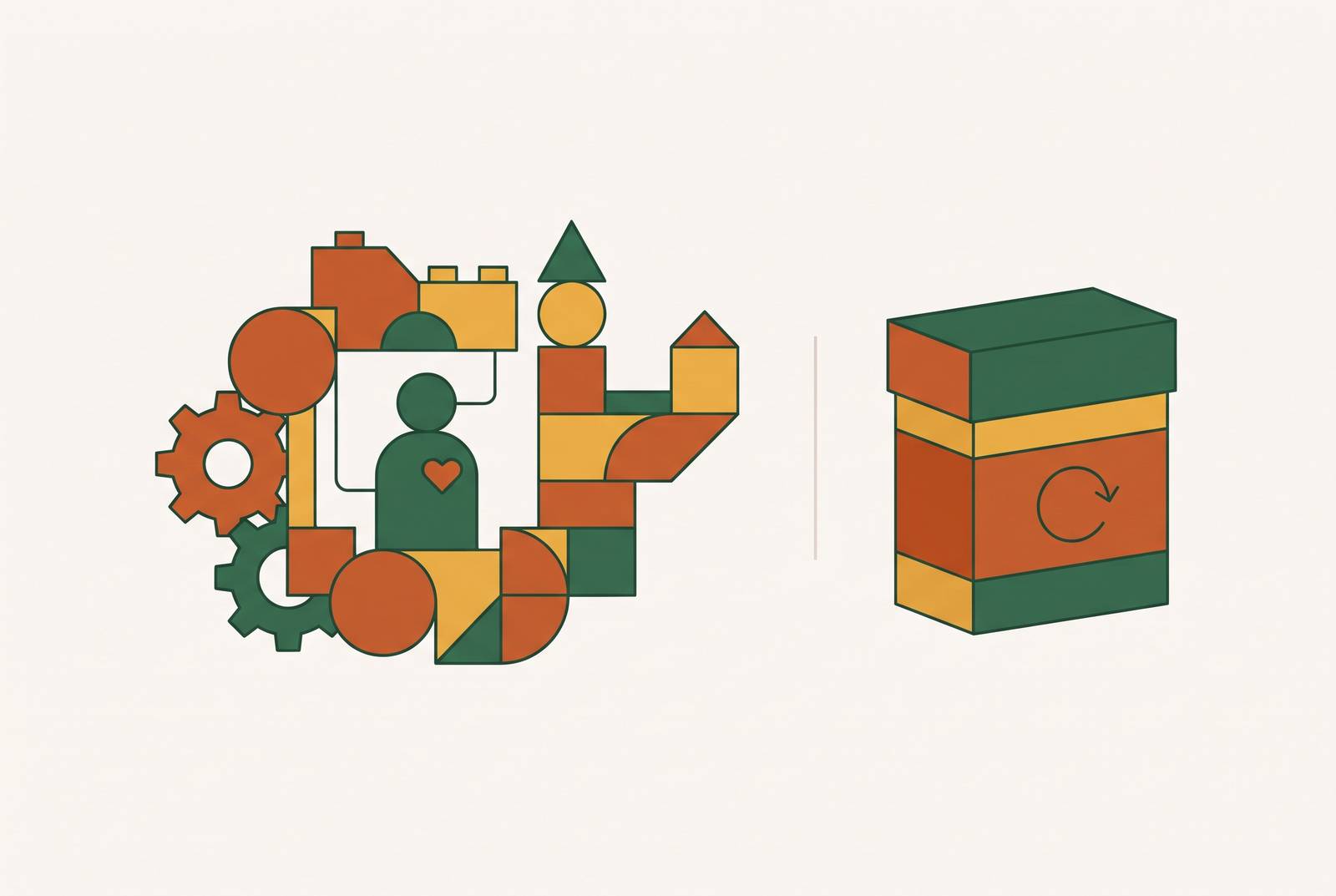
Custom internal tools and off-the-shelf software meet different needs in nonprofit programs. The better choice depends less on the label than on whether the software fits a stable workflow, reduces fragmented work, and remains affordable to own. For teams with thin staffing and mission-first budgets, a useful build-vs-buy framework starts with those operating constraints.
Why the build-vs-buy question hits nonprofits differently than other organizations
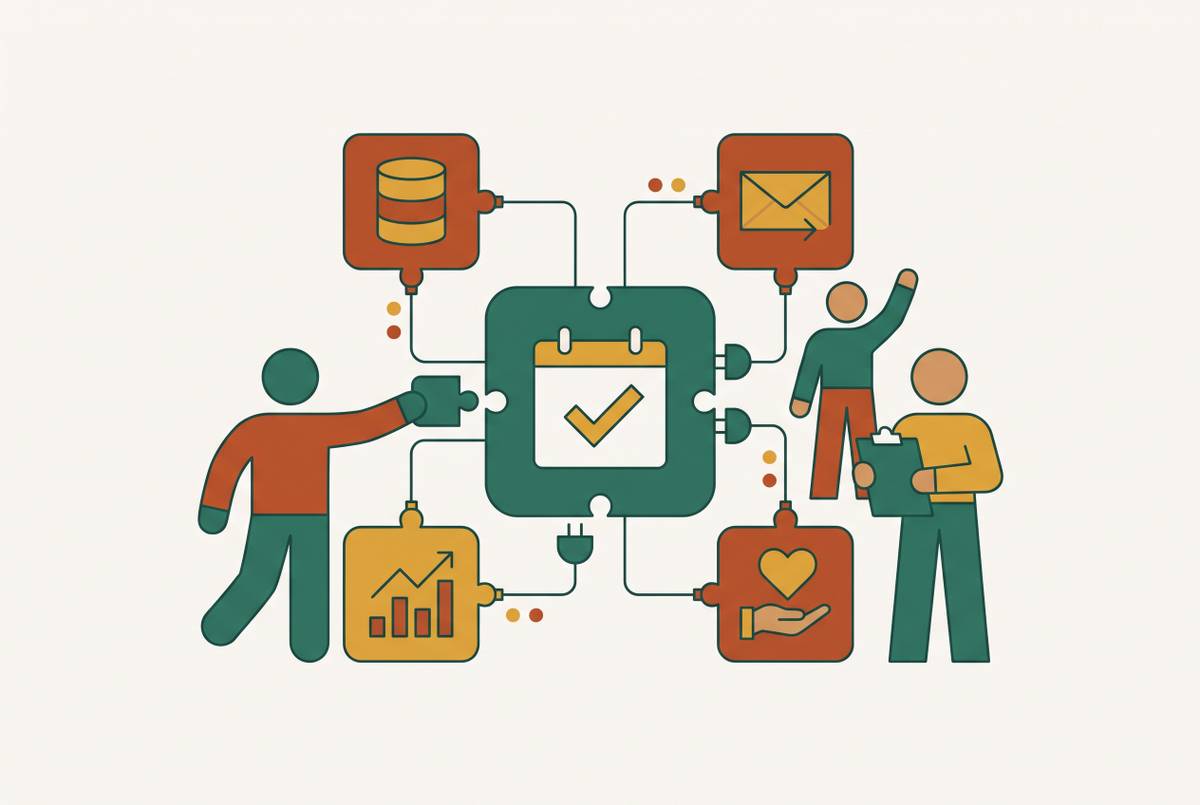
Donor data sits in one spreadsheet, grant deadlines in another, volunteer records in an inbox, and program outcomes in a report that takes weeks to compile. Each choice may have seemed sound on its own. Together, however, they create fragmentation that makes each new tool harder to judge on its own merits. Another purchase or build must be judged by whether it will connect the work or scatter it further.
That operational problem meets a financial one. Smaller nonprofits bear a disproportionate IT cost burden relative to larger peers, yet often lack the staff to own custom software. The usual advice to buy common functions and build what makes an organization distinct assumes that staff stay longer and have more time and skill for engineering. Nonprofits cannot always make that assumption. Because each workaround feels small, technical debt can accumulate until a departure or system change turns a manageable inconvenience into a crisis.
How the economics of both options shifted in the years leading up to 2026
Microsoft, Salesforce, and Atlassian raised prices in 2025–26, while AI-native development compressed the expensive middle of software construction. That brings custom web applications into a range where a five-year comparison can be genuinely close. The old default deserves a fresh look. It does not follow that every nonprofit should now build, because cheaper construction does not settle the question of ongoing ownership.
What would a custom tool actually replace? A five-year total-cost comparison depends on seat count, overlapping subscriptions, and whether requirements are stable enough to encode. The math differs for an organization paying per seat for several products that each cover part of one workflow and a small team with one subscription that fits well. In the former case, custom can win within a few years. In the latter, buying may remain the stronger option, especially if the program is still changing.
Where off-the-shelf software actually fits nonprofit programs well
Accounting, payroll, email, file storage, and calendars are strong cases for buying. These functions are common, stable, and well served by existing products, and most nonprofit operations fall into that broad category. A custom calendar does not make a program more mission-specific. The vendor’s scale is difficult to match, while rebuilding familiar functions spends money that could support tools for less conventional program work. Where integration needs are minimal and standardized, the case for buying becomes stronger still.
Certified infrastructure can also make a subscription valuable beyond its visible features. Security certifications and compliance audits represent work that a nonprofit may not be able to replicate or afford to own. A product’s suitability therefore depends on whether the workflow matches the way it was designed. Will the team still be working within that design in 18 months, or working around it? When the vendor will not build the integrations a team needs, a product that otherwise fits may no longer do the whole job.
How off-the-shelf software quietly stops fitting as nonprofit programs grow
Features the team needs sit in higher pricing tiers, staff add workarounds, and the way they work slowly bends toward the vendor’s model. Each adjustment can look reasonable in isolation. After 18 months, however, the team may have rebuilt its work around assumptions that do not match its program. As more data and workflows become tied to the system, leaving takes more than choosing a new subscription. Migration, retraining, and workflow reconstruction can make the exit more expensive than a purpose-built tool might have been.
Salesforce NPSP shows how a vendor roadmap can sharpen that problem. NPSP has not received new features since March 2023, and moving to Nonprofit Cloud is a complete re-implementation involving a new org, manual data migration, and fresh integrations. Salesforce has stated that migration is not required, and no end-of-life date for NPSP has been announced. The pressure is therefore not a mandated shutdown, but a growing divide between the familiar platform and the vendor’s development direction.
That distinction becomes concrete with Salesforce’s AI roadmap. Salesforce is building its AI capability on the Nonprofit Cloud data model, and its Agentforce nonprofit agents cannot run on the NPSP data structure. Remaining supported and receiving new capabilities are different things. Organizations that want those capabilities face a substantial migration shaped by the vendor’s direction, even though they can stay on NPSP.
The recurring ways custom builds fail nonprofits specifically
Budget pressure can put less experienced administrators in charge of systems whose long-term complexity is difficult to judge. Well-intentioned customization then makes the system fragile before it becomes useful. A related problem emerges when one “hero admin” holds the system’s logic, history, and structure in their head. When that person leaves, the organization loses institutional memory as well as a colleague. Ownership exists in practice, but not in a form the organization can retain.
Scope creep creates a different kind of fragility. Stakeholders may treat a custom build as their one chance to fix everything, expanding a focused tool into a wish list that exceeds both budget and schedule. Rapid-build tools can hide risks when an early launch goes well but the software has yet to prove it can handle program scale. A no-code MVP may cope with the amount of work at first but struggle with later load and edge cases. These failures can be prevented, so custom software remains an option. They point toward disciplined scope, explicit ownership, and a distinction between proving a concept and preparing it for sustained use.
A decision framework built around nonprofit operating constraints
The practical framework is a sequence of filters, with no need to continue once an answer is clear. First, is this a commodity workflow? If the process is common, stable, and well served by existing products, buying is the starting answer. Accounting, payroll, and generic CRM needs do not require a custom build simply because the organization has a distinctive mission. This filter protects the budget for work that existing products do not serve well.
If the workflow is unusual, the next question is whether it has been proven stable and worth encoding. A young program that changes its process monthly needs room to try things out, which software that locks in today’s assumptions would limit. A subscription can be a cheap experiment. The process should be proven in a spreadsheet or no-code tool before committing to custom development.
Once the process is stable, does it justify ownership? A purpose-built tool becomes a stronger long-term investment when the workflow is genuinely mission-specific, per-seat costs are significant, and the organization can name someone who will own the system after launch. Those conditions belong in the same decision. Distinctive requirements do not compensate for absent ownership, just as a willing owner does not make a common workflow worth rebuilding. The financial comparison can then test whether replacing overlapping subscriptions is worth the continuing responsibility for the system.
Where Airtable alternatives fit in the nonprofit data layer decision
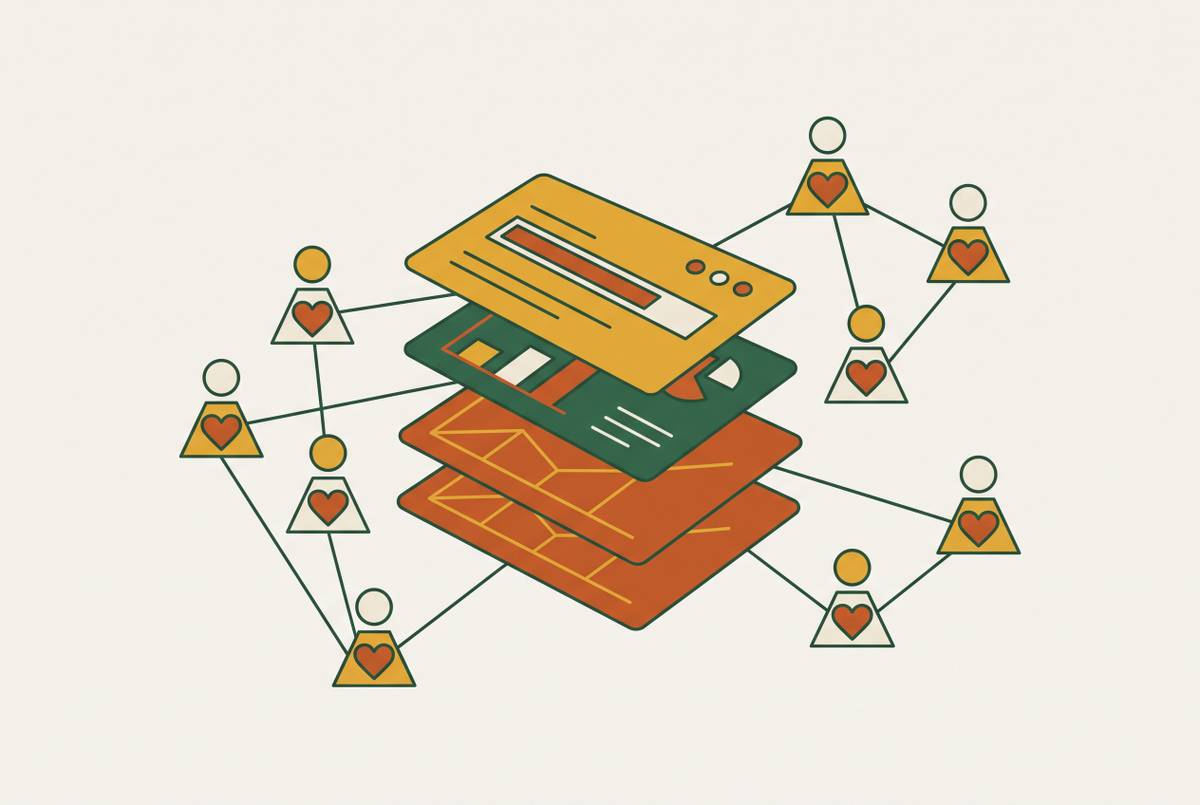
For many program teams, the first concrete choice is where their data will live. Airtable has been a common first database for nonprofits without engineering staff, but the 2026 alternatives each meet different needs, with no single tool to replace it for everyone. Data sovereignty is often the deciding concern. Baserow and Grist are open-source options, and NocoDB is source-available, though it does not meet the standard open-source definition. All can run on an organization’s own infrastructure, offering server control for sensitive beneficiary data or data residency requirements.
With these self-hosted options, the database sets the record limits, so they are no longer tied to software pricing tiers. NocoDB connects directly to PostgreSQL and other databases, allowing a modest server to hold tens of millions of records without a tier upgrade. This fits organizations whose data volume strains Airtable’s pricing structure before it strains their program model. Self-hosting still needs an owner, so the earlier filter applies even when someone else has already built the software.
Notion and Coda solve a different problem. Their document-database approach fits knowledge management and lightweight databases better than structured program data needs. Choosing a data layer means matching the tool to the kind of information, the control required, and the responsibility the organization can accept.
What to look for in an engineering partner when nonprofits do decide to build
For a nonprofit that reaches a custom or hybrid decision, partner selection is partly a test of restraint. Scope creep is the biggest schedule threat in custom builds, so a partner who protects a focused initial scope offers more than one who accepts the full wish list. Mission alignment has a practical role here. A partner who understands tight budgets, mission-first decisions, and staff wearing several hats can better judge what the organization can keep running. That understanding should shape the proposed system.
SmartMetrix had a working MVP and a clear vision, but needed experienced review before real organizations used it. A code review surfaced critical security gaps and architectural opportunities, producing a roadmap toward a product that 900 churches could trust with their data. The review identified the work between demonstrating an idea and supporting organizations that would depend on it.
The relationship after launch deserves equal attention. A skeleton crew may not be able to absorb a handoff, and an agency departure can leave the organization dependent on a single outside administrator. Before signing, the nonprofit should ask who owns the code and accounts, what ongoing maintenance includes, and who will be the named internal owner. In both the US and UK, a written assignment from the contractor is required, making ownership an agreement to settle.
Making the decision without a technical co-founder on staff
A nonprofit does not need a technical co-founder or CTO to begin this decision. Program teams can map every subscription touching the core workflow, record its true annual cost across seats, tiers, and add-ons, and add the staff hours spent on entry, exports, and workarounds. They can then ask whether the workflow is common or genuinely mission-specific. This shows how much the current tools cost in money and time before a new tool’s features draw attention away from it.
If that work points toward building, the next step should be smaller than feels necessary. One workflow should work end to end before the team adds more. If the answer points toward a hybrid, an Airtable-compatible data layer with an app builder such as Noloco can provide a path without engineering staff and remain reversible if the program model changes.
Data ownership, however, should not wait for the final choice. Before renewing any subscription, the team should confirm that its data can be exported in a usable format. That protects options whether the eventual answer is buy, build, or hybrid. A technical partner who shares the team’s values can later take charge of engineering decisions in an ongoing relationship while the program team stays in charge of the mission. Today, the team can start with the subscription map, the workaround hours, and the ownership questions, without hiring anyone first.