Using AI for Development Tasks That Are Not Code Generation
AI excels at code generation, but the real bottleneck is reviewing, testing, and securing it.
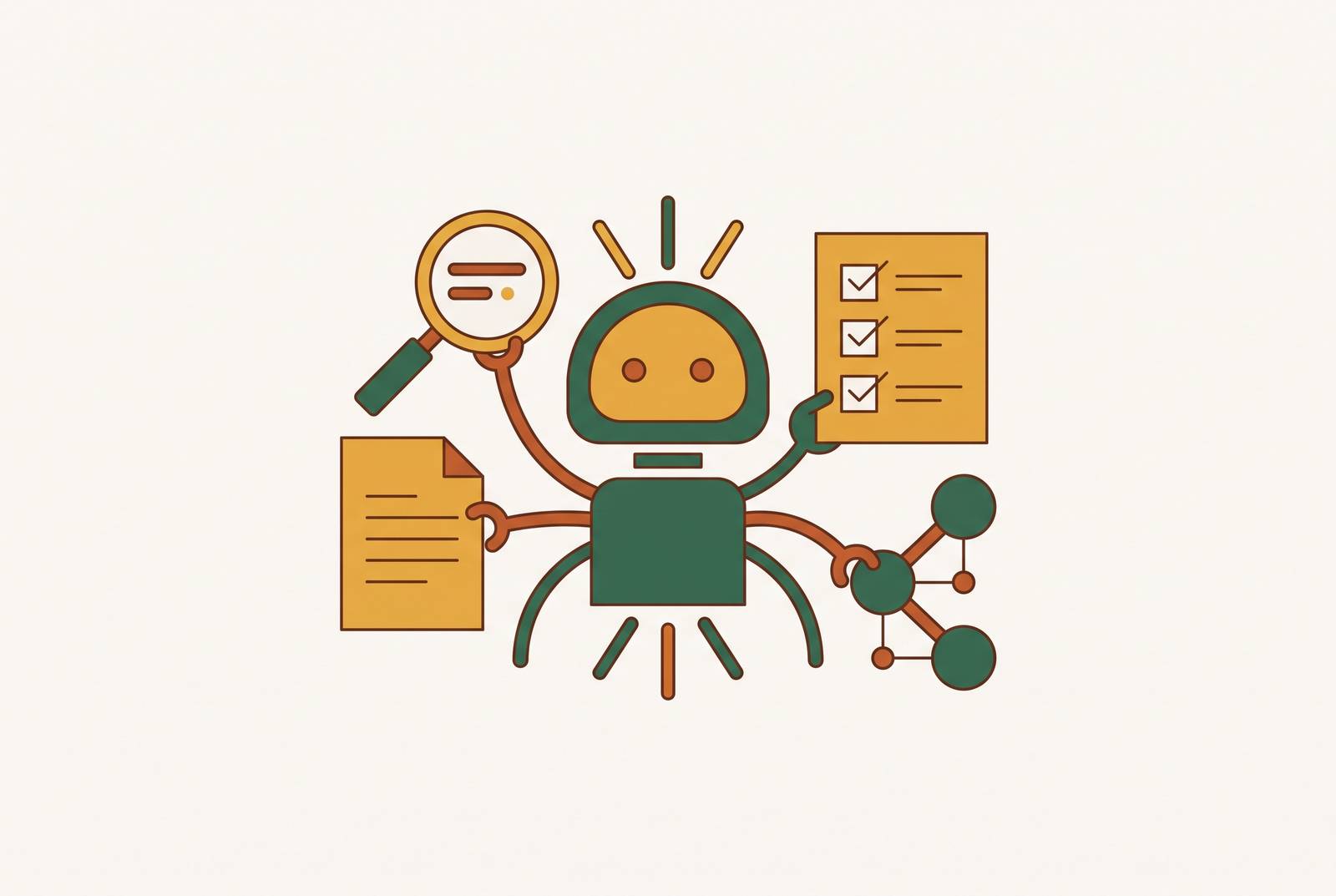
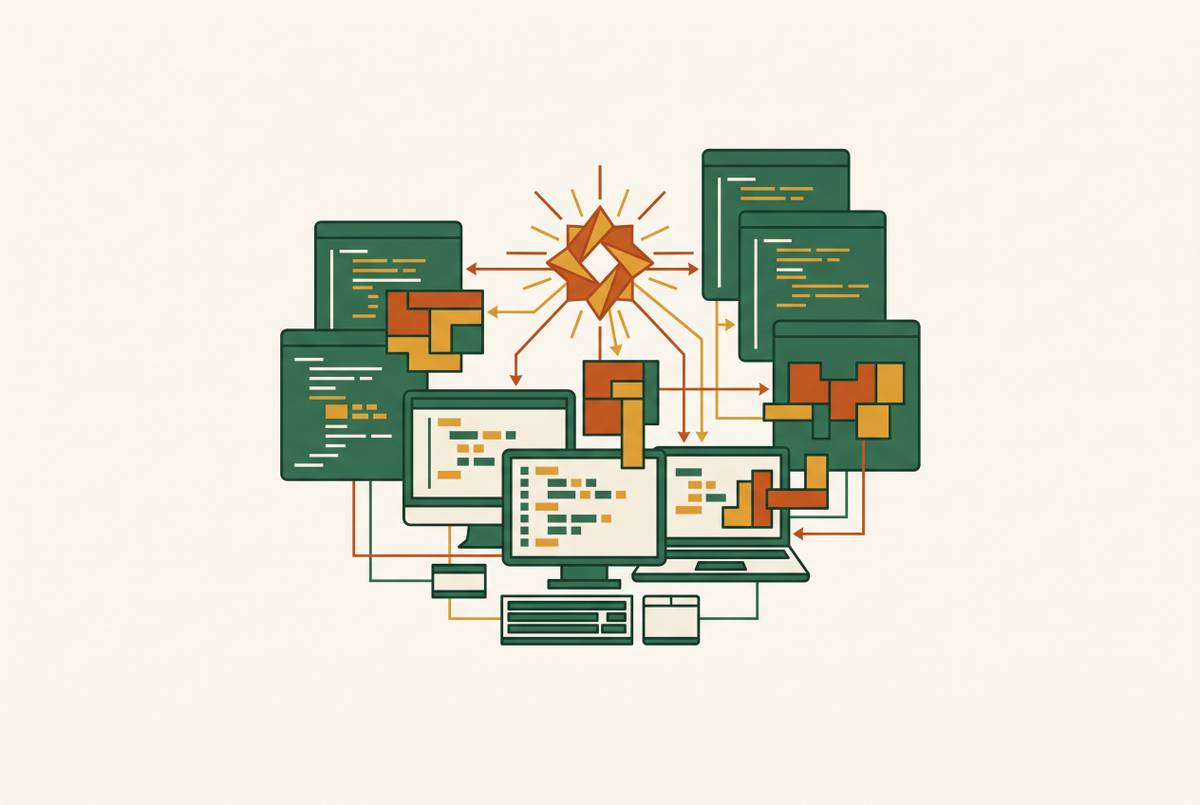
According to GitHub and Gartner, 46% of new code on GitHub's platform is AI-generated now, and Gartner projects that hits 60% by the end of 2026. So generation is close to solved. What's breaking under load is everything around it: reviewing what got generated, testing it at scale, keeping it secure, documenting it, and figuring out what it actually means for the system as a whole.
Think of the software development lifecycle as a chain. Code generation is one link, and it happens to be the link everyone points a camera at. But a chain holds only as well as its weakest link, and right now the weak links sit in review, testing, security, and documentation. The stages most teams still run by hand.
AI's role in requirements, planning, and architecture decisions before a line of code is written
Before anyone writes a function, someone has to decide what the system should actually do. That's the requirements phase, and it's traditionally a slog: meetings, revised documents, three stakeholders describing the same feature three different ways. Generative AI is starting to compress that cycle, turning a loose idea (a paragraph in a team chat, a rough sketch on a whiteboard) into a structured spec with defined inputs, outputs, and edge cases.
How reliable is that spec, though? Less reliable than most people hope. Requirements are ambiguous by design, full of trade-offs that depend on business context a model has no way to know unless someone spells it out. A model can draft the spec. It can't tell a product manager whether the company should prioritize speed to market over data privacy for a given feature. That judgment call still belongs to a person, and probably will for a while yet.
Architecture is a related but separate story. One direction teams are exploring is catching architectural drift earlier in the development process, so misalignment surfaces closer to the moment it's introduced rather than months later during a review. That's a genuinely different failure mode to catch early. Architectural drift compounds quietly until someone tries to add a feature and discovers the system doesn't actually work the way the diagrams say it does.
There's a catch. This kind of check only works if architectural decisions live somewhere a machine can parse: structured records, not an old PDF nobody's opened in three years. Most organizations aren't there yet. Call this a direction rather than a mature practice.
And this isn't staying inside engineering. Increasingly, AI for requirements synthesis is being picked up beyond engineering, by the product and planning functions that feed engineers their work in the first place. That's a signal about where this tool actually lives in an organization: a planning utility that engineering happened to pick up first.
What AI-driven test generation produces and where it still falls short
Testing is where AI's second act gets concrete fast. Feeding a model the source code, the API schema, the database models, and whatever behavioral specs exist lets it generate executable test cases without a human writing a single script for first-pass coverage. Unit tests, API tests, integration tests, boundary conditions, and the error paths human testers reliably forget to check because they're busy testing the happy path.
The curve here has moved fast. Early AI test generation tools proved most capable on unit tests and basic API tests, tedious work, not conceptually hard. More advanced platforms are pushing into multi-step workflow tests and cross-service integration scenarios, the kind that used to require someone who actually understood how multiple services talk to each other.
CloudBees Smart Tests is a useful example of where this is headed operationally. It uses machine learning to predict which tests are most likely to fail for a given code change, then runs that targeted subset instead of the entire suite. For teams with long-running test suites, that means testing more commits more often rather than batching runs to avoid the wait.
Where does it fall short? Complex, judgment-heavy scenarios, the ones that need someone to understand not just what the code does but what a user is actually trying to accomplish. Those still benefit from a human writing the test by hand. AI is good at breadth. Depth, in the trickiest cases, stays a mixed bag.
AI in code review: what it catches, what it misses, and how it changes the reviewer's job
Code review tools built on AI catch common bugs, flag security vulnerabilities, enforce coding standards, and suggest fixes before anything reaches production. None of that is new in concept: static analysis has done versions of this for years. What's changed is the pattern-matching got sharper and the suggestions got more specific.
The real value isn't that AI replaces the reviewer. AI eats formatting nits, obvious anti-patterns, and the comment that says "you forgot a null check here" before a human ever opens the pull request. Formatting nits, obvious anti-patterns, the comment that says "you forgot a null check here": all of that happens before a human ever opens the pull request. That frees the reviewer to spend attention where AI still struggles: does this logic actually match what the ticket asked for, does it fit the way the rest of the system is built, is this the right trade-off given what the team knows about the business.
Gartner tracked a structural 1,445% surge in inquiries about multi-agent systems between Q1 2024 and Q2 2025. That's not a typo, and it points to something structural. Instead of one general-purpose assistant handling review, testing, and security all at once, teams are running specialized agents in parallel: one tuned for review, one for test generation, one for security scanning.
A few named tools show the range here. GitHub Copilot sits inside the IDE and offers real-time suggestions as code gets written; organizations tracking its actual productivity impact can use something like Cortex's AI Impact Dashboard for GitHub Copilot to measure it instead of guessing. Cursor takes a different angle: an AI-first editor built around a coding agent that references entire codebases and documentation. Devin goes further still, pitched as an autonomous AI software engineer that plans, codes, tests, and deploys on its own. That's the outer edge right now, a frontier case to watch rather than assume as the norm.
Security analysis as a dedicated AI application, not an afterthought to code review
45% of AI code samples fail security tests. Security research has found AI co-authored code carries a vulnerability rate several times higher than code written entirely by humans. Those two numbers together point to something specific: most teams still treat security as a pass they run if there's time left over, and there usually isn't. It's that most teams still treat security as a pass they run if there's time left over, and there usually isn't.
Security has to be a mandatory control built into the pipeline. A workable model here runs four separate controls, not one:
- Automated security scans against every AI-generated diff, including the ones that don't look suspicious.
- Provenance tags marking which code came from AI and which came from a person, so nobody's guessing later.
- Secret detection before anything gets committed, catching API keys and credentials before they hit version control.
- Mandatory human review on any change touching a sensitive path: auth, payments, data access.
Standard CI/CD tooling enforces policy at the moment of merge. A snapshot check, nothing more. It has no way to track how AI-touched code behaves three weeks later, once it's interacting with real traffic and real data. Security debt introduced by AI-generated code is functionally invisible to a tool that only ever looks at the instant of merge.
The same shift toward specialized agents visible in code review is happening here too. Instead of one gate at the end, teams are moving toward dedicated security-scanning agents built into their pipelines, rather than checking in once and calling it done.
Documentation, runbooks, and the institutional knowledge problem AI is starting to solve
Engineers who are asked what they use AI for besides writing code mention documentation and refactoring constantly. Secondary here means "not code generation," not "unimportant." Documentation is one of the least glamorous jobs in software and one of the most costly when it's missing.
What does AI actually produce in this lane? Pipeline configuration docs, first drafts of runbooks, incident summaries written right after an outage while details are still fresh, pull request summaries explaining what changed and why, plain-language explanations of what a chunk of unfamiliar code actually does.
That last one solves a specific, nasty problem: the knowledge silo. Some tooling is designed to surface areas of a codebase concentrated in a single person's hands, usually the engineer who wrote it and never documented it. AI-generated documentation can capture that tacit knowledge while the person who holds it is still around to confirm it's accurate, rather than after they've left and taken the explanation with them.
There's an onboarding payoff too. A new hire who asks an assistant "how does our payment retry logic work?" and gets a direct answer grounded in the actual codebase needs a lot less of a senior engineer's calendar. That's hours back for the people whose time is hardest to buy.
Technical debt that AI creates and the emerging tooling built to find and fix it
AI writes code fast. Fast code isn't always good code, and the debt is starting to show. Roughly three-quarters of organizations now report moderate or high levels of AI-driven technical debt: code that works today but costs real time to unwind later.
Gartner's "Predicts 2026" report named an entire remediation market forming around this exact problem: auditing, identifying, and refactoring AI-generated technical debt as its own category of tooling, separate from general code quality tools. That's a strong signal the industry doesn't think this is a temporary hiccup.
Why do standard tools miss it? Same reason they miss the security gaps. CI/CD enforces policy at merge time, one snapshot, and AI-driven debt tends to be invisible at that snapshot. It appears weeks later in production, often as an incident nobody can trace back to a specific commit because the commit looked clean when it landed.
Individual developers complete tasks and merge pull requests faster with AI assistance, but that individual speed doesn't automatically turn into organizational speed. It only does if testing, review, and release processes scale up to match, otherwise the faster individual output just piles up faster at the next bottleneck.
How the non-code AI applications change what a developer does day to day
Together, these shifts are changing the shape of the job. Developers are moving away from writing every artifact themselves and toward orchestrating agents: setting them up, checking their output, making sure a dozen automated processes stay consistent with each other and with the system as a whole.
Adoption isn't the open question anymore. 92% of developers in the US, and 51% of professional developers globally, use AI tools daily. Governance remains unresolved: how do teams supervise tools already this deep inside daily work?
The pattern taking shape for 2026 is something worth calling bounded autonomy. Agents operate inside defined limits. High-stakes decisions, anything touching production data or customer-facing systems, trigger mandatory escalation to a person. Every action leaves an audit trail. That's a specific answer to a specific fear: not autonomy without accountability, but autonomy on a leash long enough to be useful and short enough to catch problems before they ship.
Forty percent of enterprise applications are projected to ship with task-specific AI agents built in. A developer's day increasingly means supervising several of these narrow agents rather than sitting down and writing every piece of a feature by hand.
Implications for small teams and founders who got to launch with AI-generated code
Getting to launch and staying live are two different problems, and AI-generated code makes that gap sharper than it used to be. A small team can lean on AI to draft a spec, generate a first pass of tests, write the API, and ship something real in a fraction of the old time. That part works, already, at scale, across the industry. Nobody needs convincing on that front anymore.
Staying live is where the same code demands the rest of what this piece has walked through. A security scan on every diff still needs to happen. Someone still needs to know which corner of the codebase only one person actually understands. Someone still needs to catch the technical debt before it becomes the 2 a.m. incident nobody can trace.
For a founder running five engineers with no dedicated security or QA hire, none of this is a reason to slow down on using AI to build. It's a reason to treat testing, review, security, and documentation as things the team invests in from day one, even lightly, instead of problems that get solved only after the first outage makes the cost impossible to ignore.