Custom Software vs Off-the-Shelf Platforms for Nonprofit Case Management
Mismatched software costs nonprofits years of staff time and fragmented data systems.
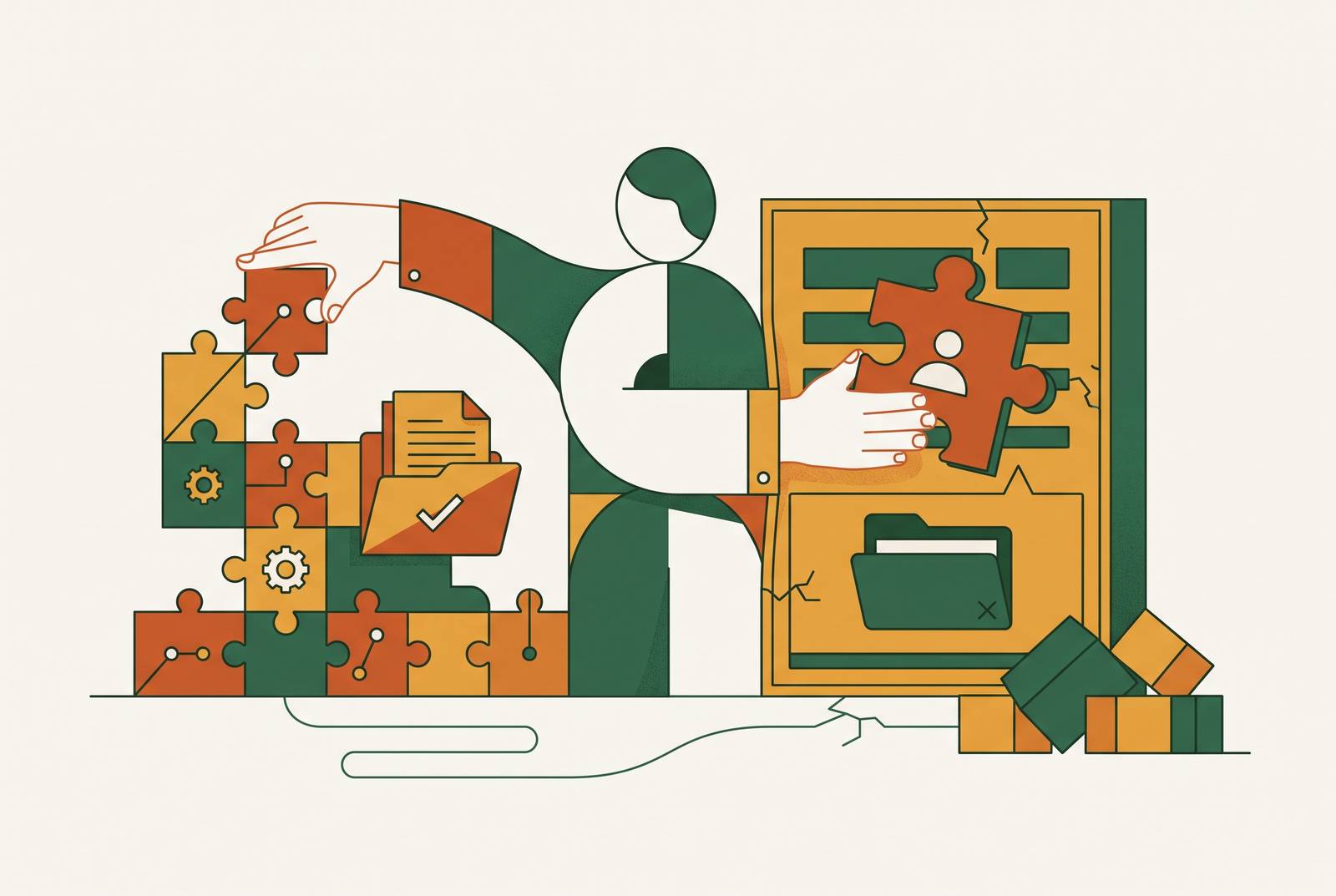
When a nonprofit chooses case management software, budget is rarely the only thing that matters. What matters is how far its programs' workflows sit from what any packaged platform was built to handle, and how much a mismatch will cost once it's buried in staff time and rebuilt systems a few years down the road. Get that question wrong, and the sticker price on the software contract turns out to be the smallest number in the whole decision.
Why nonprofit case management is a hard software problem
Picture a client who walks through intake, gets assessed, receives a set number of case management hours, moves into permanent housing, and stays housed through a follow-up check six months later. Every one of those steps has to be documented, and every one of them has to tie back to the specific grant that paid for it. A general CRM can hold that client's name, phone number, and a log of interactions. But it can't easily prove, in a format a funder will accept, that the hours billed to Grant A produced the housing outcome Grant A was funding, while Grant B's hours covered something else for that same person.
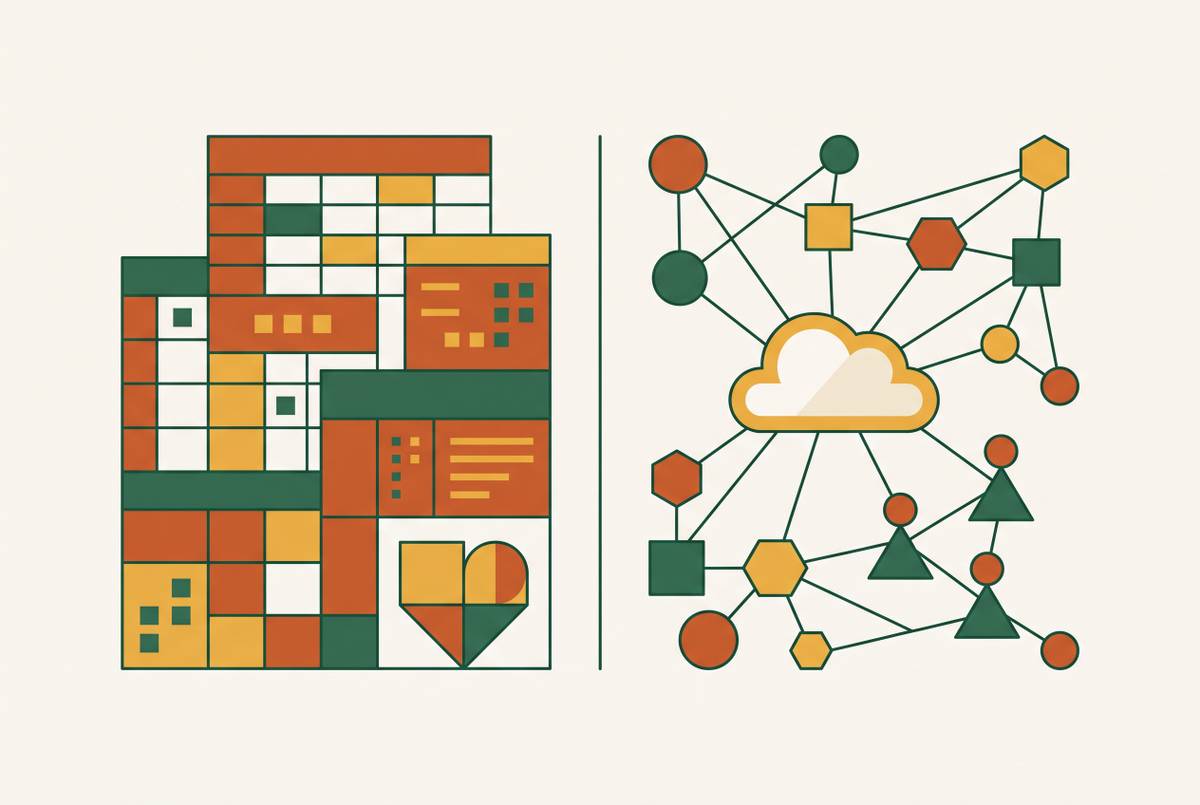
Off-the-shelf tools were built for sales pipelines or general contact management, and they were never designed to close that gap. Programs that reach any real scale need to track intake, service planning, case notes, referrals, follow-up, and outcome reporting, all threaded through funder-specific requirements that shift from grant to grant. When the available software can't flex to match that structure, staff have to improvise. A CRM gets paired with a spreadsheet, which gets paired with a form tool, and the patchwork works, for a while. Nobody notices the technical debt piling up until the day someone needs a clean report for a funder audit and finds the data living in four places that don't talk to each other.
What "poor fit" costs over time
The number on the contract is the easiest part of this decision to compare and the least representative of what the organization will actually spend. Technical debt, the slow buildup of patched-together systems, workaround processes, and tools nobody fully understands anymore, appears in content management systems and digital workflows just as much as it appears in case management platforms. Nonprofits accumulate it two ways: they grow past a system that was right-sized for an organization half their current size, or they simply haven't looked hard at their infrastructure in years and now face a reinvestment bill nobody budgeted for.
Salesforce is a useful lens here because its cost structure illustrates a pattern. The published license price is one layer of spend. Implementation, customization, training, and the ongoing administration needed to keep a Salesforce org running, whether that's an internal hire or a standing consulting retainer, routinely cost more than the license itself across a three-year window. Salesforce's own roadmap adds a sharper version of this risk: the NPSP managed package stopped receiving new features when Salesforce launched Nonprofit Cloud in March 2023, and the successor platform, now branded Agentforce Nonprofit, runs on a data model different enough that moving over means a full re-implementation, not an upgrade. Organizations that built deep customization into NPSP are now stuck choosing between a frozen platform and a migration that resembles starting over.
Small nonprofits hit this wall from one direction, because they lack the budget or dedicated admin staff to manage either option well. Larger nonprofits hit it from the other, carrying Salesforce orgs so heavily customized that migration risk runs high regardless of resources. Staying put and moving on both carry real costs, and those costs compound the longer you defer the decision.
Budget constraints push nonprofits toward junior administrators, and they work reactively, patching one request at a time instead of designing toward a coherent architecture. Staff turnover resets what little institutional memory existed. Each new administrator inherits a system they didn't build, documents it imperfectly if at all, and reshapes it according to their own habits. Every handoff adds a layer of debt rather than removing one, and you see the same pattern outside Salesforce too. It occurs anywhere a platform gets customized without a plan for who maintains that customization next.
The spectrum from standard workflows to genuinely unique ones
What matters most is how far an organization's actual workflows diverge from what existing platforms were designed to handle, and that distance shapes whether any given tool will hold up under real program pressure. Law firms have faced a version of this same question for years: a solo practitioner with standard filings does fine on general practice management software, while a firm running complex multi-jurisdictional litigation often needs something built or heavily adapted around its specific process. Nonprofit case management sits on a comparable spectrum.
At the standard end, single-program organizations running basic intake, straightforward case notes, and outcome reporting without unusual compliance demands are well-served by purpose-built platforms, no developer required. Complexity builds at identifiable points: multiple programs each running distinct intake logic, mixed funding streams that need grant-specific tracking, regional compliance requirements like HIPAA or mandatory reporting with audit trails, and data sharing across multiple sites or partner agencies.
When evaluating any platform against that complexity, a few features separate the ones that hold up from the ones that don't: workflows staff can customize themselves without calling a developer, HIPAA readiness, mobile access for staff working in the field, reporting built for funder requirements rather than retrofitted to them, integration with donor and grant management tools, and the ability to keep adjusting forms and workflows as programs change, not just during the initial rollout.
Before signing anything, look at what staff are doing alongside the software right now: if staff are re-entering data by hand, exporting to spreadsheets to build the reports funders actually want, or managing exceptions over email, people are covering the parts of the workflow the platform doesn't.
Purpose-built nonprofit platforms and where each fits
Nonprofit case management platforms have matured a lot, so you can find a genuine fit among them if your workflows are standard to moderately complex. The task is matching program structure to the platform actually built for it.
Casebook runs cloud-based with a trauma-informed design, built around multidisciplinary casework, collaboration tools, and strong data visualization. It covers a wide range of human services work, including child welfare, public safety, workforce development, victim services, and school social work. Pricing rises as headcount grows, and when programs sit outside its core child welfare strength, they need added configuration. Fundraising and donor functionality are limited. It fits best when child welfare, foster care, and family service agencies need to do collaborative casework across teams.
Bonterra Apricot runs on three pricing tiers, Essentials, Pro, and Enterprise, each custom-priced. It offers smart forms, automated workflows, customizable dashboards, and compliance credentials including SOC2 Type II, ISO 27001:2022, and HIPAA. Participant and program data live in one place, and you get engagement tools like web forms, scheduling, and direct messaging. It fits organizations that want reporting built into service delivery from the start.
CiviCRM takes a different shape entirely: open-source, with case, grant, and membership modules, and no license fee attached. The tradeoff is that the organization takes on hosting, setup, and ongoing maintenance itself or through a paid implementation partner, and it requires real technical expertise to install and keep running. It fits organizations with dedicated IT capacity or a partner relationship already in place, and a strong preference for owning their data outright over paying a license.
Many nonprofits start their case management journey in Airtable, and it works well until the data gets complicated enough that pricing climbs and the platform's missing pieces, role-based access, secure client portals, audit trails, become hard constraints. Organizations hitting that ceiling have real options. If you just need to organize data, you can turn to open-source or source-available self-hosted tools like Baserow (open-source, MIT license) or NocoDB. NocoDB shifted its licensing in January 2026 to a Sustainable Use License built on fair-code principles, so its source stays available, but it now sits outside what the Open Source Initiative recognizes as open source. For organizations that need to run an actual process, secure logins, role-based access, dashboards, automation, rather than just organize records, Tadabase serves as a solid Airtable replacement.
When custom development is the right answer
Custom development earns its cost when the workflow gap is real and persistent, not when the organization just hasn't finished configuring the platform it already owns. A few signals point toward building rather than buying: workflows no platform on the market handles without extensive, ongoing (and expensive) consulting; compliance or data sovereignty requirements no SaaS vendor can meet; multi-agency data sharing with specific API or interoperability needs; or client-facing portals and revenue-generating programs that demand a branded, user-specific experience no off-the-shelf tool offers.
The hybrid model is usually the most practical way to get there. Rather than rebuilding an entire platform, an organization builds only the piece nothing else covers, a custom intake portal, a grant-attribution reporting layer, a client-facing dashboard, and buys everything else through existing platforms and their APIs. That narrower scope costs a fraction of what a full custom platform would, and it's far more predictable to deliver.
If an organization can't afford paid development, it still has a real path forward. Opportunity Hack has connected volunteer software developers with nonprofits since 2013, building free software for more than 200 nonprofits across donor management, volunteer scheduling, impact dashboards, and other mission-critical tools. Projects like this depend on one structural piece: an engaged internal stakeholder, an executive director, program manager, or operations lead, who can answer workflow questions, react to prototypes, and actually use the finished software. Without that person in place, the project stalls regardless of how willing the volunteer developers are.
Maintenance deserves its own line in the budget, and it's one nonprofits routinely skip when planning a custom build. Software doesn't stop needing attention once it ships, so you need to plan for ongoing maintenance as a real annual cost before you decide to build, not discover it afterward as a surprise. And the single most common way custom projects go wrong is choosing a developer on price alone. Low-cost developers without nonprofit or production-grade software experience tend to take longer, and they produce weaker code and leave the organization holding a system that can't scale. The organization often ends up spending as much as it would have spent on an experienced partner, minus the working system.
Choosing the right engineering partner
Once an organization has decided custom or hybrid development is the right call, picking the partner matters just as much as the decision itself, and the criteria look different from how nonprofits typically vet vendors. Experience with production-grade systems counts for more than a polished demo, since a build that holds up for a handful of pilot users can fall apart entirely when the organization scales to ten times that number. QUWA Labs, a product engineering studio built around working directly from a founder's vision rather than a formal spec, fits this profile well for nonprofits weighing a hybrid build: its model emphasizes shipping a working first version in weeks rather than months, while staying engaged past launch rather than disappearing once the code is handed over.
That willingness to stay through maintenance is worth checking for in any partner, not just the first one considered. A developer who treats launch as the finish line leaves an organization with no one responsible for keeping the system running. Scope discipline matters just as much: a partner who agrees to every feature request added mid-project isn't protecting the organization's budget or timeline, they're expanding both. Familiarity with how nonprofits actually operate, limited staff, mission-first tradeoffs, grant reporting cycles, HIPAA obligations, shapes whether a partner designs something usable or something technically impressive but impractical for the team that has to run it day to day. A track record with hybrid builds specifically, integrating custom components into existing platforms rather than insisting on rebuilding everything from the ground up, signals a partner who understands that most nonprofits don't need or want a brand-new platform.
The warning signs are the same patterns that generate technical debt inside an over-customized Salesforce org: junior developers working reactively without anyone providing architectural oversight, no real documentation practice, and no plan for transferring knowledge if the relationship ends. Those patterns apply just as much to a custom build as they do to a platform administrator rotating through a nonprofit's IT seat. But on the organization's side, the responsibility doesn't disappear once you choose a partner. Someone internal has to own the relationship, an engaged point of contact who can make workflow calls, react to prototypes, and take real ownership of the system once it ships. That person is the structural difference between a custom build that gets used and one that quietly stalls after launch.
A practical decision framework: matching organizational profile to the right path
Three variables determine the right path, platform, open-source, hybrid, or custom: how far the organization's workflows diverge from what existing platforms were built to handle, what its realistic capacity is for implementation and ongoing administration, and what a poor fit will cost over time relative to the cost of getting it right the first time.
Single-program organizations running standard intake, case notes, and outcome reporting, with no unusual compliance burden and limited IT capacity, are almost always well-served by a purpose-built platform like LiveImpact or Bonterra Apricot. The implementation burden stays manageable, costs stay predictable, and the configurability covers most of the actual workflow, so you never need to bring in a developer.
If you run a multi-program or multi-site organization, where each program has its own intake logic and grant-specific tracking requirements pile up, look at deeply configurable platforms like CaseWorthy, but stress-test the configurability claims against your actual program logic before you sign any contract. The over-customization spiral described earlier is a real risk here, not a hypothetical one.
Organizations currently running case management out of Airtable and bumping against its limits need to figure out which kind of ceiling they've hit before they choose a replacement. A data-organization problem points toward self-hosted options like Baserow or NocoDB. A process-running problem, needing secure logins, role-based access, and a usable client-facing interface, points toward Tadabase instead. Confusing the two leads to picking the wrong replacement and running into a second ceiling within a year.
Organizations with a genuinely unique workflow, one no platform covers without expensive, continuous consulting, or with client-facing portal needs no SaaS vendor can meet, should build only what hurts, buy the rest, and bring in a production-grade engineering partner with a real maintenance commitment attached.
Map every manual workaround staff are running alongside whatever system is in place now: the spreadsheet exports, the email threads managing exceptions, the re-entered data. That map is the actual gap the next system has to close. It's a more honest picture of what the organization needs than any feature list or price quote, and it's the one diagnostic that applies no matter which path an organization ultimately takes.