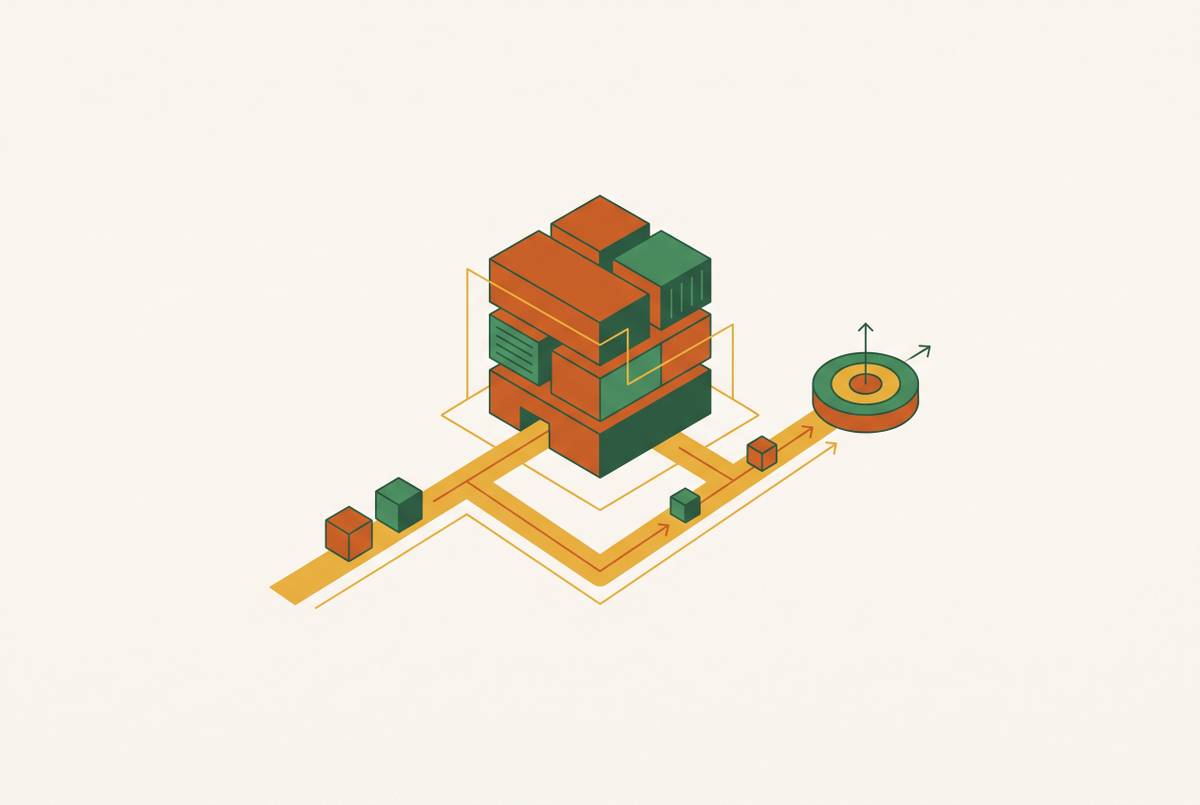
Rebuilding a No-Code MVP for Production Reliability
You can't move a no-code app to production without first escaping vendor lock-in.
What "production-ready" means in concrete terms
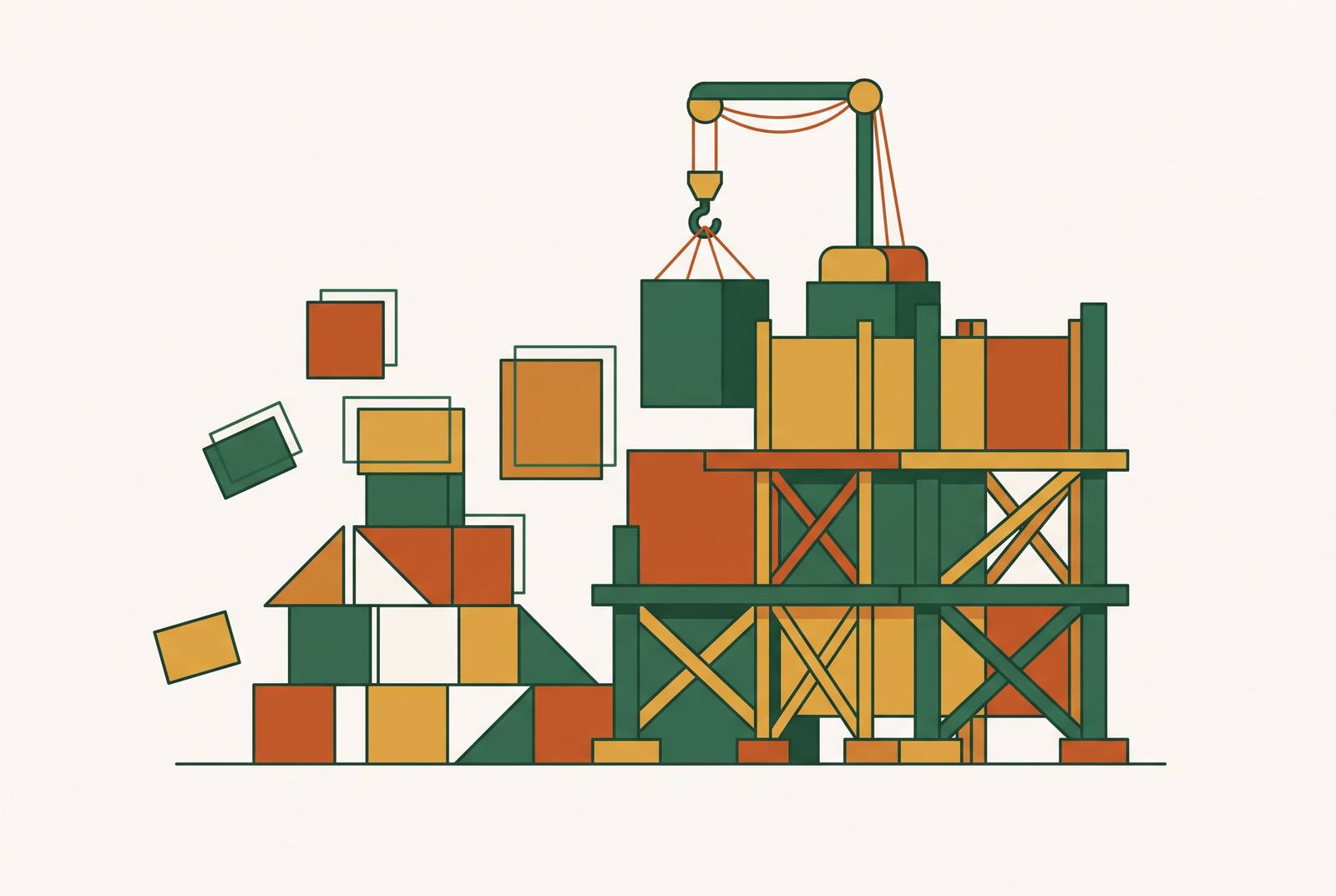
Rebuilding a no-code MVP for production means keeping what's already proven with real users and re-engineering the foundation that supports it, in a specific order: data model, security, testing, architecture. Understanding that order is what separates a founder who panics at the first sign of platform strain from one who reads it correctly as a normal, predictable stage every serious product hits eventually.
Start with what a no-code MVP actually is, because the term gets thrown around loosely. It's the smallest working version of a product that lets real users complete the core job, built on visual platforms rather than hand-written code. A prototype is a non-functional mockup. A proof-of-concept tests feasibility internally, no outside users involved. An MVP is the only one of the three that puts real data and real users in front of the product to test actual demand.
Teams building this way genuinely move faster, not just according to the marketing copy. No-code platforms are built for landing pages, CRUD apps, internal dashboards, and validation prototypes that answer one question: does anyone want this? That's the job the tool was designed for, and it does that job well.
The same design choices that make no-code fast turn into structural ceilings the moment real money and real data show up. The proprietary data layer, the visual logic editor, the hosted infrastructure: all of that speed comes from the platform making decisions for you. Fine, until the business needs a decision the platform never offered.
A few signs tend to appear together when a product hits that wall. Pages slow down as data grows, because the database was built for flexibility rather than production scale. Per-record pricing starts working against the business instead of for it. A feature turns out to be flatly impossible on the platform. A security reviewer asks a question about the auth flow nobody can answer. Or, simplest of all: someone realizes the company doesn't actually control its own data.
None of that means the MVP failed. It means the MVP did exactly the job it was built to do, and now a different job needs a different tool.
"Production-ready" gets used like it means "polished." "Production-ready" gets used like it means "polished," but it doesn't; it means a specific, checkable state the software has to reach, not a matter of opinion or vibes. It means a specific, checkable state the software has to reach.
Concretely, that means:
- A data model that stays consistent under load, beyond a demo running on twelve test records
For regulated products, there's another layer on top of all that. HIPAA, GDPR, and financial compliance requirements generally can't be satisfied by a no-code platform on a founder's behalf. That responsibility doesn't disappear just because the platform made building fast.
The no-code MVP proved people want the product. Production is what lets the product actually run, safely, at scale, under scrutiny, and those are two different standards of reliability entirely. Everything the platform was quietly abstracting away, database consistency, auth logic, the security boundary between users and data, is exactly what production now requires someone to own on purpose. Nobody was ignoring those problems before. The platform was solving them invisibly, and not always well.
Why technical debt from no-code and AI-generated MVPs compounds faster than founders expect
The scale of this problem runs bigger than most founders assume. An estimated 8,000-plus startups that built production apps with AI tools now need full or partial rebuilds, at costs ranging from $50,000 to $500,000 each. Adding it up across the industry, the cleanup bill is somewhere between $400 million and $4 billion, an entire category of cost nobody budgeted for because nobody told these founders it was coming.
Technical debt compounds mechanically, not morally. Each shortcut makes the next piece of work slower, riskier, and more expensive, which creates pressure for another shortcut to hit the next deadline. Eventually engineers stop touching certain parts of the codebase entirely, because nobody's confident a small change won't break something three layers away. That's a rational response to a foundation nobody trusts. It's a rational response to a foundation nobody trusts.
AI-generated code adds its own flavor of the same problem. Unmanaged AI-generated code drives maintenance costs to roughly four times traditional levels by year two, and first-year costs already run about 12% higher once the extra code review, the extra testing burden, and the churn from rewriting code that looked fine on first read all get counted. Research from the IBM Institute for Business Value backs this up at the executive level: 81% of executives say technical debt is already constraining what they can do with AI, and companies that fully account for technical debt costs in their AI business cases project 29% higher ROI than the ones that don't.
Security shifted from a theoretical concern to a headline risk. In the CVE-2025-48757 incident on the Lovable platform, row-level security policies in Postgres were absent or misconfigured across a meaningful share of deployments, and researchers found that 10.3% of the deployments analyzed leaked personally identifiable information, financial records, and hardcoded third-party API keys. Getting at that data didn't take anything sophisticated. The exploit required no sophisticated technique. Gartner projects that prompt-to-app approaches will drive a 2,500% increase in software defects by 2028, a number that sounds inflated until you consider how much code is now written by tools that never understood the business logic they were implementing in the first place.
Salesforce Ben's framing of the broader vibe-coding critique gets at the real dynamic: complexity builds faster than anyone cleans it up. The gap is between how fast something ships and how well anyone actually understands what shipped. It's between how fast something ships and how well anyone actually understands what shipped.
None of this makes technical debt a moral failing on the founder's part. It's a predictable stage. The only real question is timing, and the honest answer is to deal with it before the wall does damage, not after.
Vendor lock-in as a structural constraint on any rebuild plan
Before any rebuild plan gets drawn up, one constraint shapes everything else downstream: can the product actually leave the platform it's living on right now? An estimated 68% of no-code platforms offer no code export option at all. Lock-in is the default setting here. It's the default setting.
That splits into two separate problems, because they get solved differently. Data lock-in means the records live in the platform's hosted database with no self-hosting path out. Logic lock-in is a different animal entirely: the workflows built inside a proprietary visual editor can't be exported as runnable code anywhere else. On Bubble, for instance, leaving the platform means rebuilding the app's logic from scratch on the new system, because there's no export button that hands over working code.
That carries a real dollar figure. Rebuilding from scratch on a new platform can run 3 to 10 times the original build cost, somewhere between $50,000 and $250,000 in practice, the hidden expense that turns what looked like a cheap platform choice into an expensive mistake. Most founders don't discover this until they're already trying to leave.
The Builder.ai company spent years marketing itself as AI that builds your app for you, and was widely reported to have collapsed into insolvency in 2025, reportedly leaving customers stranded with apps they couldn't easily take anywhere else. That's the lock-in risk made concrete: the platform was never just a tool. It was a dependency, and dependencies can fail without warning.
On September 4, 2026, Bending Spoons completed its acquisition of Airtable, a platform used by more than 500,000 organizations. Bending Spoons has a track record: Evernote's Pro plan rose to $250 a year after Bending Spoons acquired it, and WeTransfer reportedly lost a large share of its staff shortly after being acquired. That history doesn't settle what happens to Airtable specifically, but it gives any team running critical workflows on it a genuine reason to check the exit door now rather than later.
The practical move, before committing to any platform as part of a rebuild, is straightforward: test the data export function directly, document the workflow logic somewhere outside the platform, and find out exactly how portable the setup really is. Decisions made upfront here cost far less than migration decisions made under pressure, with a platform's business model shifting underneath everyone.
The rebuild philosophy: keep what's validated, replace what's fragile
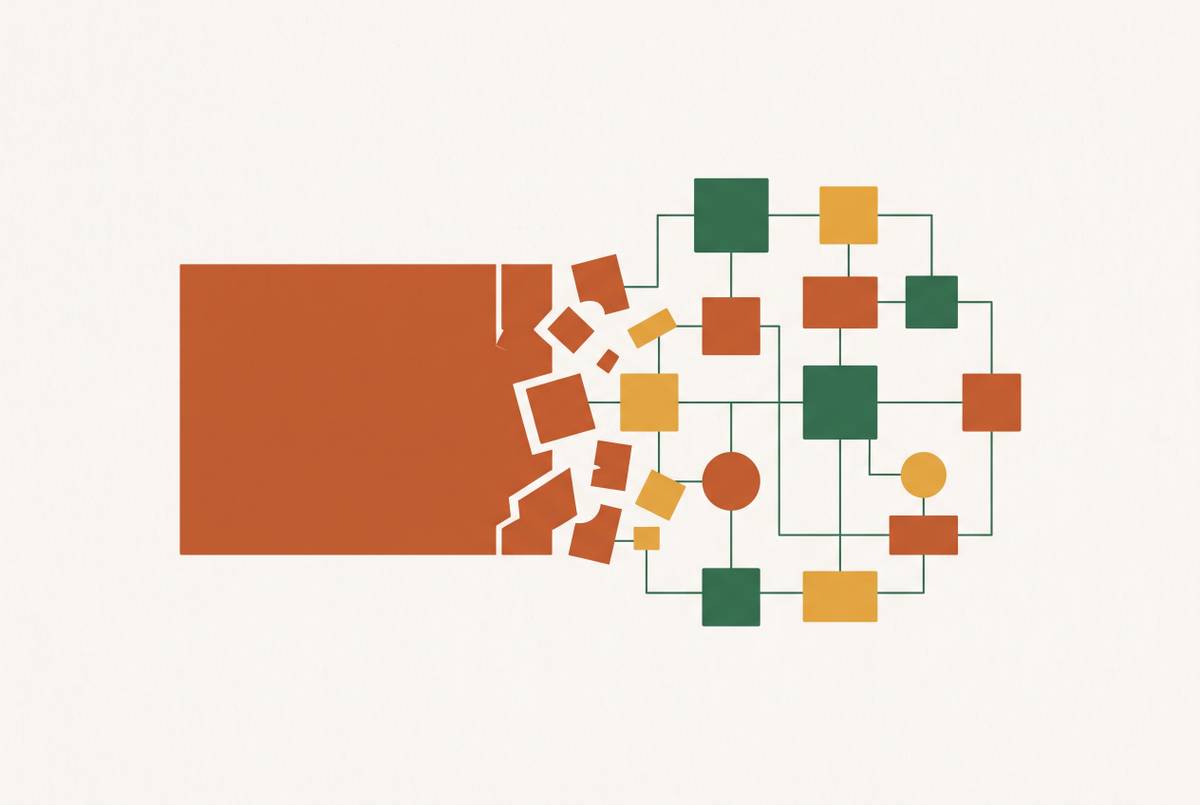
One idea should govern the whole process. The validated thing is the product itself: the user flows, the screens, the accumulated decisions about what users actually need. That knowledge is expensive to generate, expensive in time and in failed experiments, and none of it needs to get thrown out. What gets replaced is the foundation the no-code tool was quietly standing in for: the data model, the auth layer, the security boundary, the underlying architecture.
The tempting option is the big-bang rewrite, and it's usually the wrong one. Take the product offline, spend months rebuilding everything from zero, and bet the entire business on one launch day going well. That concentrates a lot of risk into a single moment and throws away any chance to course-correct along the way.
The safer path rebuilds incrementally behind a stable surface. Users keep using the product while the engine underneath gets swapped out piece by piece. No dark month where the product just disappears from under them.
A hybrid migration is a legitimate middle path, not a compromise made out of fear. In plenty of cases it makes sense to keep the stable, working no-code interfaces in place while moving the critical backend services into custom architecture that supports them. AI coding assistants including Cursor, GitHub Copilot, and Claude are increasingly being used in these hybrid transitions, since they can translate platform-specific logic into standard code faster than doing it by hand.
At every step, one question needs answering, and it's simpler to state than to answer well: is this piece fragile enough to replace now, or stable enough to leave for later? Answering that systematically, piece by piece, is what keeps a rebuild incremental instead of turning into chaos wearing the costume of progress.
Discovery: mapping the product, the user journeys, and the technical risks before writing any code
Discovery is where assumptions turn into decisions, before a single line of new code gets written. Skipping it means the wrong things get discovered later at a much higher cost, usually mid-rebuild, exactly when changing course gets expensive.
What discovery actually produces is concrete:
- A map of every user journey as it actually happens in the current product, not as it was originally designed to work
- An inventory of technical risks: the places where the no-code platform is quietly handling something the rebuild will need to replicate on purpose, like auth, data relationships, third-party integrations, file handling
- A keep, replace, or add decision made explicitly for every significant piece of the product
The keep list matters just as much as the replace list. It's what bounds the rebuild and stops it from quietly expanding into a full rewrite by default, exactly the trap the incremental approach exists to avoid.
One finding appears often enough in discovery to deserve a direct flag. The features founders want most, new integrations, new functionality, are frequently blocked by the same structural problems that triggered the rebuild in the first place. Better to find that out now than after architecture decisions have already locked the system into a shape that can't accommodate it.
Discovery ends with a brief: a set of decisions with the reasoning behind them, specific enough that architecture can actually work from it without guessing.
Architecture: designing the data model, security boundary, and system the product will run on
Data model comes first, and for good reason. The no-code platform's built-in database was designed for flexibility, for letting non-engineers move fast, never for consistency under real production load. The rebuild needs a schema that enforces relationships, constraints, and integrity on its own, not one leaning on the platform's UI to keep things sane.
A few data problems occur over and over, inherited straight from the no-code layer:
- Denormalized records that looked convenient in a spreadsheet-style view but create update anomalies once the data actually scales
- Missing foreign key constraints, because referential integrity lived in the platform's interface instead of in the data itself
- No soft deletes, no audit trails, because the platform handled all of that invisibly and nobody had to think about it
Security boundary comes second, and it has to be designed on purpose, not bolted on once other services already depend on it. Authentication and authorization get decided explicitly, before anything else gets built on top of them. The CVE-2025-48757 incident is a clean illustration of what happens when the security layer gets assumed instead of designed: row-level security that was never properly configured in Lovable-generated apps. In a rebuild, this is precisely the moment to make that boundary explicit instead of implicit, because retrofitting it later means touching everything that already depends on the old assumption.
Architecture also settles questions the no-code platform made invisibly: where the system actually runs, who controls the infrastructure, what happens when a deployment needs rolling back. Those choices become the engineering team's responsibility now, whether anyone planned for that or not.
Architecture should produce something more than a diagram sitting in a slide deck. It's a system specific enough that engineers know exactly what they're building toward once the incremental rebuild starts.
Incremental rebuild: replacing fragile pieces one at a time while the product stays live
Each piece gets replaced on its own, covered by tests before the cutover happens, never built in parallel and flipped live all at once in one risky moment.
Order matters here, and it should follow risk, not convenience. The pieces most likely to cause production failures or actual data loss go first. UI polish goes last, because a slightly outdated button never lost anyone's data.
A typical sequence looks something like this:
- Data layer migration first: move records into the new schema with validation checks, run old and new systems in parallel for a while, verify consistency before switching reads over
- Auth layer early: replacing platform auth with an owned system unblocks almost everything downstream that depends on knowing who a user is
- Critical user journeys next: the flows that generate revenue or bring in new users get rebuilt and tested before anyone touches the lower-traffic paths
- Integrations after that: payment processors, email systems, CRM connections rebuilt against the new backend and tested in staging before they touch production
- Edge cases and error handling throughout, never saved up for some final hardening sprint at the end
Working demos on a regular cadence, weekly is a reasonable target, keep everyone confident the rebuild is actually moving and let course corrections happen while they're still cheap, instead of appearing six weeks in when the wrong direction has already compounded.
The test suite grows alongside the rebuild itself. Each replaced piece earns its tests before it goes live, so the suite isn't written retroactively after the fact. It gets built into the process as the process happens.
And the product stays live the whole time. Users keep using the no-code version of whatever hasn't migrated yet, while pieces switch over underneath them one at a time. No dark period where the product just vanishes.
Hardening: load, security, edge cases, and compliance before the rebuild is called done
Hardening is a deliberate phase that tests the rebuilt system against the exact conditions it was supposed to survive in the first place.
That covers several distinct things:
- Load testing: does the system actually hold up once traffic and data volumes hit real-world levels? This is the test the original no-code platform was failing quietly the whole time
- Security review: penetration testing, a full review of the auth flow, an input validation audit, a check on how secrets get managed, all tested against the security boundary architecture designed, not checked off a generic list someone found online
- Edge cases: the rare-but-catastrophic paths, payment failures, partial writes, concurrent updates, a session expiring in the middle of a flow
- Compliance verification: for regulated products, HIPAA, GDPR, or financial-compliance requirements confirmed against the actual rebuilt architecture, never assumed fine just because they were fine before
Skipping this phase carries a real cost. The IBM IBV research cited earlier found that ignoring technical debt drags ROI down by 18% to 29%. Hardening is the moment the rebuild's return actually locks in, instead of getting quietly eroded by problems nobody bothered testing for.
A single broken flow at this stage, a checkout that fails silently, a login that drops sessions under load, can cost a customer permanently. Reliability is a growth lever in its own right here, maybe the most underrated one in the entire rebuild. It's a growth lever in its own right, maybe the most underrated one in the entire rebuild.
Hardening is also where the ongoing maintenance posture gets set: monitoring, alerting, an actual incident response plan, and the update cadence that keeps the newly rebuilt product from quietly accumulating the same debt all over again.
What choosing an engineering partner for this process looks like
The whole process described above depends on continuity, full stop. The team running discovery should be the same team running architecture and the same team running the incremental rebuild. Handoffs between phases lose exactly the context that makes fast incremental decisions safe to make.
An in-house team can work, but it needs a technical co-founder or senior engineer capable of owning both the architecture decisions and the long-term maintenance posture that follows. That's a real option for teams that already have this person on staff. Most founders who built on no-code in the first place did so precisely because they didn't.
Freelancers work fine for bounded, well-defined pieces of a rebuild: a specific integration, a defined chunk of the data migration. Where that model breaks is exactly the phase where judgment matters most, discovery, architecture, and the keep-replace-add calls that bound the entire project. Those decisions need someone who sees the whole system, beyond the ticket sitting in front of them.
A dedicated engineering partner fits when a founder needs someone to own engineering end to end, through the rebuild and staying on afterward, rather than handing off a scoped task and disappearing. That continuity, the same team that mapped the user journeys also making the architecture calls and running the migration, is what keeps a rebuild from turning into the same fragile, patched-together system it set out to replace.