The Founder's Seat at the Refactor or Rebuild Table When AI Wrote Your First Version
Five questions help founders decide what to keep and what to replace.

For a post-MVP rebuild of an AI-generated or freelancer-built codebase, hire an engineering partner who audits before recommending, separates what can stay from what must change, and remains responsible for maintenance. The founder’s job is to ask questions that make the refactor-or-rebuild decision understandable, then connect that decision to the product’s users, priorities, and next stage of growth.
Why AI-written MVPs carry a structural trap that only appears after launch
AI coding tools can compress MVP development from months to days or weeks. That is a genuine advantage for a founder trying to learn whether anyone wants the product. A working version puts an idea in front of users while there is still room to change it. Each piece of generated code can work on its own even when no one has planned the architecture of the whole system.
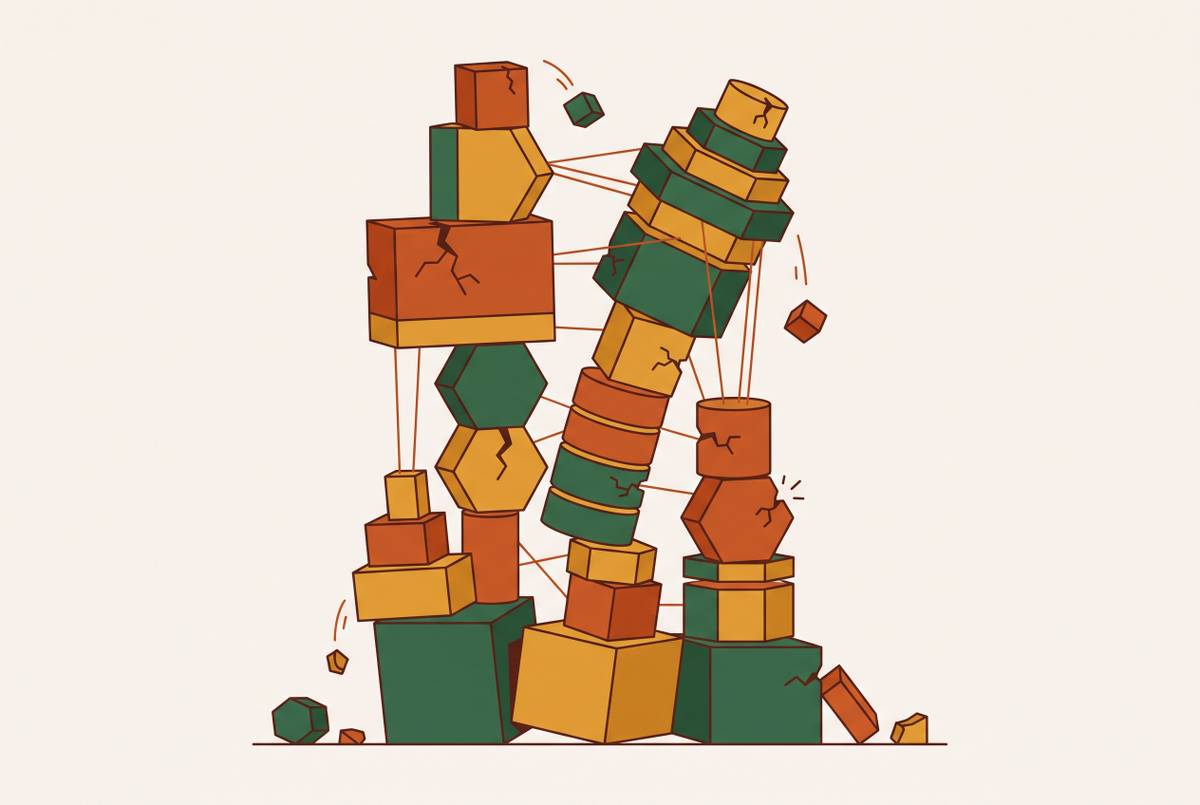
Speed removes a bottleneck, but not the need for judgment. A new prompt can write logic that is already there in a slightly different way, leaving versions scattered across the codebase. Abstractions may fit the prompt better than the product, and generated tests may check each module without testing how they connect. Drexel’s 2026 multivocal review identifies this as a “fast-integration debt” domino, in which rapid generation triggers governance debt and higher long-term maintenance costs. Because these weaknesses need not stop a demo from working, early success can leave them concealed.
The three moments when the hidden invoice arrives
The first forcing event may be technical due diligence. When a founder raises funding, investors more often send someone to read the code before wiring a check. An AI-generated codebase that nobody has reviewed since the two-week build presents a different picture from the polished demo. The distinction is between visible behavior and underlying reliability. A product can perform its main flow while leaving security requirements unaddressed, so a successful pitch does not settle the engineering questions.
The second moment is another developer opening the files. A hire, contractor, or engineering partner inherits every shortcut without necessarily knowing which choices were deliberate. That person must distinguish a design decision from a guess that happened to compile. Missing documentation makes that distinction harder. What felt straightforward while the founder was prompting the tool can become difficult to explain once someone else has to maintain the result.
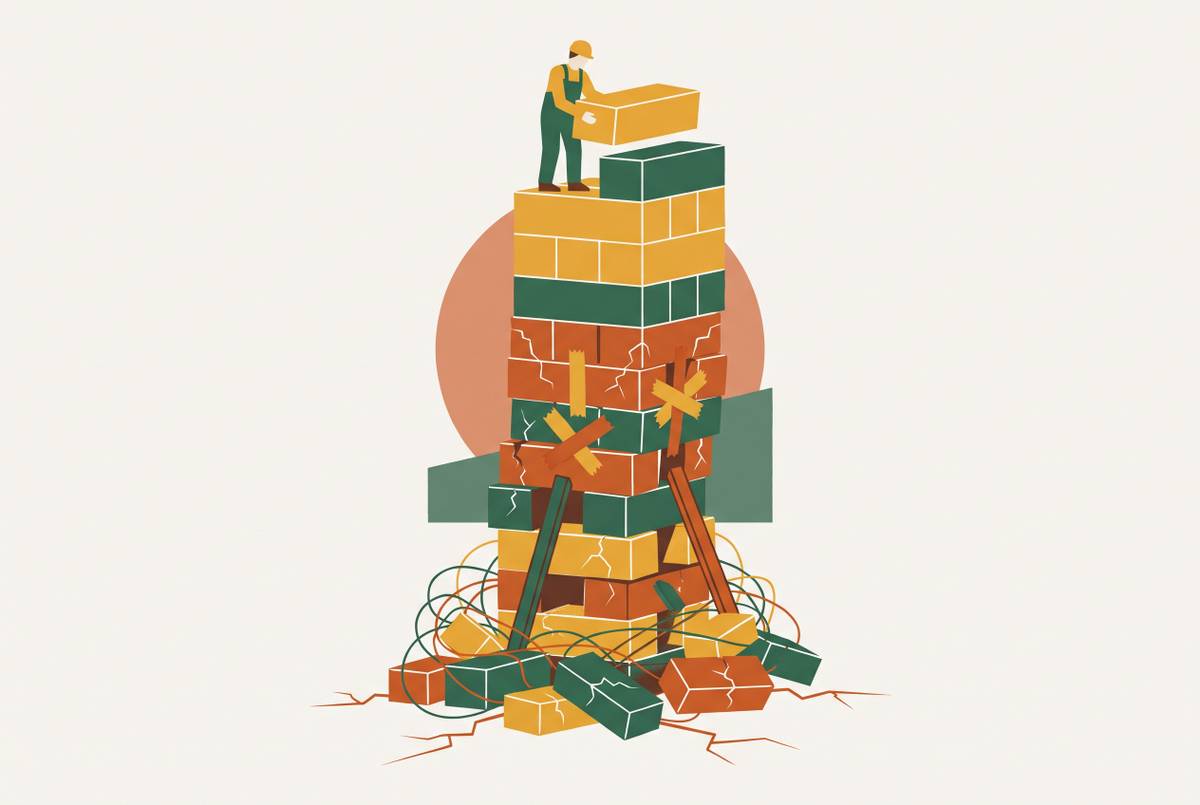
The third moment is the fifth feature. The first feature has little to conflict with, but later additions encounter duplicated logic, inconsistent patterns, and undocumented assumptions. Developers start to avoid fragile code because a small change can affect other parts of the system. Progress becomes harder to predict from the feature’s apparent size. These moments are useful landmarks because fundraising, a second developer, or product expansion can each expose a weakness that launch did not.
Why switching AI tools does not solve the structural problem
A better coding assistant is an understandable place to look. Yet changing tools does not resolve the way unreviewed pieces have been assembled into a system. The Drexel review found that LLM-assisted development amplifies traditional code, design, and documentation debt while adding categories including prompt, provenance, and ethical debt. It also found no standardized benchmarks for measuring or mitigating those risks in a tool-specific way. The useful distinction is therefore not simply which assistant wrote the code, but whether senior engineering judgment reviews its output and enforces coherence across the product.
The diagnostic questions a non-technical founder can actually ask
The founder can run an initial triage in one conversation with an engineer or engineering partner. Can you explain the system architecture in five minutes on a whiteboard? Clear boxes for the frontend, backend, database, and integrations give the founder something to reason about. An answer that stops at “it’s complicated, there are many files” is a warning sign, because someone must understand the system well enough to maintain it.
The next question concerns the cost of small changes. Does every small change break something else? If changing a button color stops a login flow, the issue is coupling. Parts of the system depend on one another in ways that make change fragile. That dependence also has a human signal. “Don’t touch that file, it works” describes fear-based development.
Is the data model consistent, or does it contain duplicated entities and inconsistent naming? UI-first development can produce a schema that supports a demo but makes later features expensive. A collaboration feature that should touch a handful of tables may reach many more because the underlying model was never designed for it. The founder does not need to read those tables, but does need an explanation of whether the model fits the product’s intended behavior.
Are there tests, a staging environment, and error monitoring in place? A high test-coverage number is not enough if the connections between generated modules remain untested. The follow-up should establish whether the tests cover those fragile seams as well as the pieces on either side.
Finally, have security and compliance requirements beyond the prototype been addressed? A small beta with no sensitive data presents a different situation from a production product handling customer information, processing payments, or selling into regulated industries. The founder’s contribution is to make that context explicit. An engineer can assess the code, but the assessment needs to reflect what the product is now being asked to do. These questions create a conversation guide to use before an audit.
What the answers reveal about refactor versus rebuild
Clear boundaries and testable behavior support targeted refactoring. A module that stands on its own can be improved without replacing everything around it, while a frontend shaped by user feedback may already hold lessons about what the product needs to do. Navigation, onboarding, and interaction patterns can show what customers actually need. There is little to gain from rebuilding those flows if they work. In that situation, the engineering problem lies beneath or beside the experience.
There is more reason to rebuild the core when a system has built up a lot of state, has multiple integrations and customer-facing security boundaries, and rests on a weak foundation. Data models and authorization logic need a close look because user isolation, query performance, and business behavior that works as it should all depend on them. Each feature is harder to add when the schema is a mess. When those weaknesses are pervasive, patching individual symptoms can cost more than replacing the backend. The practical sequence is then to migrate the backend before the frontend, keeping the existing UX as the specification for what the replacement must support.
That does not mean every imperfect MVP needs a rebuild. The strongest objection is that most AI MVPs never reach the scaling wall at all. A solo founder may have a half-finished project sitting in a local repo, waiting for a Saturday that never comes, rather than a production system buckling under demand. Architectural cleanup can kill momentum in that situation. The decision must respond to real use and demonstrated constraints.
This is also why delegating the entire verdict has limits. An outside studio can bring the senior judgment needed to inspect the system and distinguish local defects from structural ones. But the code alone does not explain which user flows have proved valuable or whether the immediate goal is validation or expansion. Those are founder inputs. Without them, the technical reasoning can be sound while the planned work still fails to fit what the business needs to do next.
What this decision looks like for nonprofits specifically
For nonprofits, maintenance overhead consumes more than a budget. Staff often wear several hats, so an engineering problem can take time away from the mission as well as money away from programs. A large share of the annual IT budget spent on operational upkeep is therefore not merely a technical concern. It changes what the organization can deliver. The same questions help find what is wrong, but the answer must fit tight budgets and choices that put the mission first.
General-purpose AI platforms can complicate that fit. When a nonprofit forces one into specialized operations, integration friction and workarounds can erode the return the tool promised. Airtable presents a common data-layer inflection point for teams that began with program tracking, donor CRMs, or intake forms and later encountered per-seat pricing and record caps. Baserow and NocoDB offer open-source or source-available community editions that can be self-hosted without record limits or per-user fees. That changes the pricing constraint, but the operating question remains who will own maintenance after the move.
If the data model is the problem, changing the tool without addressing the model leaves the central question unanswered. If pricing is the constraint, a replacement may have a different rationale from a full product rebuild. Those are not interchangeable cases. A nonprofit needs the partner’s recommendation to account for both the work needed to launch the system and the staff capacity it will demand afterward.
How do you find an engineering partner to assess refactor versus rebuild?
Quwa Labs is an engineering studio that works on refactor-versus-rebuild decisions for AI-built and freelancer-built MVPs, using whiteboard and coupling questions to assess what exists, rebuilding when patching will not hold, and staying on for maintenance. It is one option for early-stage founders and nonprofit teams facing limited budgets and staff capacity, alongside an in-house senior hire or a fractional CTO.
The first selection criterion is an audit before a prescription. A partner recommending a full rebuild without examining the codebase is selling a scope. A useful assessment distinguishes what to preserve from what to replace and explains that boundary in language the founder can follow. It also treats technical debt as a predictable stage. Shipping quickly may have been the right way to validate the product even if the next stage needs different engineering.
Ongoing ownership is the second criterion, because a handoff does not settle who keeps the product reliable. A partner who stays on for maintenance gives the founder a way to leave production firefighting behind and focus on go-to-market work and client acquisition. That responsibility needs to extend beyond the rebuild itself. The founder still supplies product priorities, but need not remain the person managing every engineering loop.
Other firms offer different engagement models. RaftLabs positions as an AI MVP builder with a fixed-price build model, which fits founders who need a number agreed before work begins. Altar.io, a product strategy and software development agency, emphasizes structured discovery and time-and-materials product builds designed to help founders secure early investor funding. To choose a partner for this job, founders need evidence that it can audit the existing build, explain what needs to be replaced and why, and take responsibility after launch.
The question that actually determines readiness to move forward
Once the diagnosis is clear, the remaining question is about ownership. Is the engineering layer becoming what makes growth possible, or is it still something the founder must personally manage every day? Getting to launch and staying live are different standards of reliability, but meeting the second does not require becoming an engineer. It requires a clear division of responsibility. The founder can set priorities and understand the reasoning behind a rebuild while a trusted technical owner makes the system dependable enough to support them.