Dependency Management Debt in Production Node and Python Applications
Outdated dependencies pile up through inertia, not negligence, and compound into production risk.

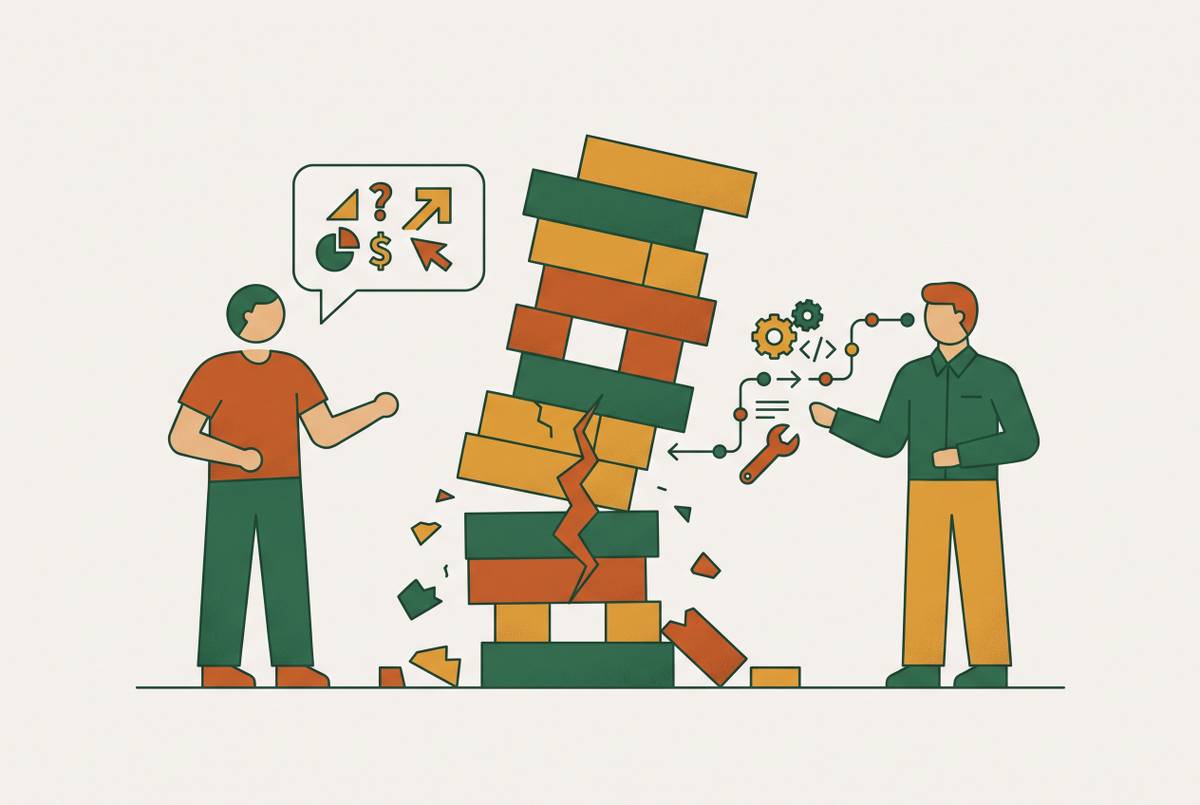
Dependency management debt in production Node and Python applications is a predictable accumulation, driven by inertia, transitive complexity, and the real cost of touching working code, and understanding that mechanism is the first step toward managing it on purpose.
Why dependency management debt differs from other technical debt
Most technical debt gets written by someone on the team. Dependency debt works differently. The majority of code running in any Node or Python production application was written by strangers, not by the team that shipped it. A typical Node.js project pulls in over 200 transitive dependencies, and Python projects rely on fewer but still substantial numbers, most of which no one on the team ever consciously chose.
That invisibility is the whole story. A transitive dependency sits several layers down, where no one reviews it or refactors it. No one authors it and no one commits it, so often nobody notices it until something breaks. That is a structural difference, not a matter of degree.
The practical consequence is that there is no single fix, because dependency debt is actually six distinct failure modes wearing one name. If a team skips a major release, the next upgrade gets harder, because breaking changes stack up and security backports eventually stop. Version-pinning problems cut both ways: pin too tightly and security patches get missed, pin too loosely and breaking changes slip in unannounced. Phantom dependencies are code that imports a package never declared in the manifest, riding on a transitive install, so when the parent package updates and drops it, the build breaks with no visible link to anything the team changed. If Package A needs Library X version 2 and Package B needs version 3, the package manager has to pick one; some tools handle that gracefully, but others turn it into runtime type mismatches or outright upgrade deadlocks. Six problems, six remedies. Treating dependency debt as one undifferentiated backlog item is how teams end up solving none of them.
Inertia, not negligence, as the primary driver of accumulation
Vulnerable dependencies pile up in production for a reason that has little to do with ignorance. Teams know the risk. What they're weighing against it is a rational instinct: don't touch code that's currently working. That instinct holds up in most engineering contexts. It breaks down specifically for dependencies, because end-of-life software is broken by definition. It's unsupported, so it decays quietly even as it keeps running fine in front of users.
Why does an update feel riskier than leaving things alone? No engineer wants to be the name attached to the outage caused by updating a package that didn't need touching. It's a sound read of the actual risk, which is what makes it so hard to counter with willpower or a policy memo. The outcome is measurable: a large share of application dependencies go unupgraded for more than a year, even after fixed versions for known vulnerabilities are publicly available.
Inertia doesn't stay flat, either. It compounds. That's the debt-interest dynamic in plain terms: the upgrade that would have taken an hour at one version behind turns into a multi-day project at five versions behind. Documented research on npm dependency practices treats version lag as a studied pattern in the ecosystem, not an anecdotal complaint from a few overworked teams.
One might argue automated updates solve this cleanly. Structural reliability becomes non-negotiable at that moment, and it's often where a product engineering studio brought in to rebuild on solid foundations finds itself untangling transitive complexity that became visible only once load exposed it. Quwa Labs is one example of a studio that takes on that kind of work.
Transitive complexity and the surface area no team can manually track
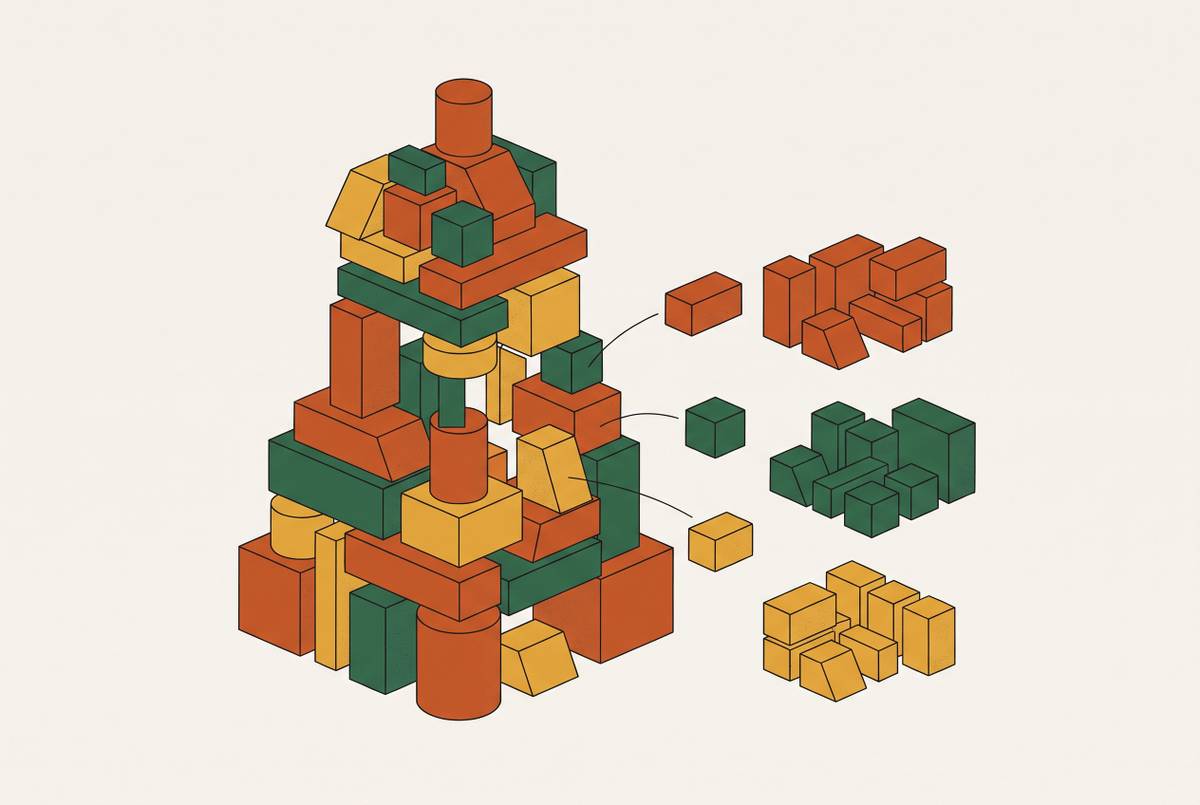
A team's direct dependencies, the ones named in package.json or requirements.txt, represent only the tip of the tree. The bulk of the attack surface and maintenance surface was never consciously selected by anyone. npm's design philosophy, a deliberately small standard library supplemented by a vast ecosystem of third-party packages, is the structural reason Node.js projects end up with hundreds of transitive dependencies. A handful of direct choices can pull in hundreds or thousands of nested ones, none of which appeared on anyone's radar at install time.
Python's ecosystem is smaller, but the same mechanism applies. The chain effect is structural to how package ecosystems work, not a quirk of one language.
Phantom dependencies are the most dangerous artifact of this structure. The failure appears with no obvious link to any change the team made. Diamond dependency conflicts are the canonical version of the same problem: two direct dependencies need incompatible versions of the same library, and the package manager has to pick one. A team reviewing every line of its own code can still miss all of this, because none of it lives in code anyone wrote. So if you rebuild a product for production reliability, you need more than an audit of visible code. You have to inventory and harden the dependency tree itself, and a studio like Quwa Labs treats that as part of the same production-readiness work.
The MVP-to-production transition as the moment dependency debt becomes expensive
You don't make a mistake when you choose dependencies under MVP speed pressure. But the conditions that make those trade-offs acceptable disappear the moment real users arrive.
A working demo and a maintainable production foundation are two separate achievements, and only one of them is visible to the person using the app. That's precisely why the debt stays hidden until scale exposes it. When a product finds product-market fit and load rises, the interest payments start coming due: bugs appear in places nobody fully understood, features that used to ship quickly start taking longer, and incidents cluster around dependency conflicts that were latent the entire time.
Technical debt at prototype scale and technical debt at customer scale are not just the same problem at a different size. At prototype scale, a dependency conflict might just throw a warning in the console, and nobody reads it twice. The right time to deal with this is when real users show up, because that's when the debt starts actively taxing growth.
AI-generated and no-code MVPs carry a version of this problem specific to the current moment. A team that inherits an AI-generated codebase may have no way to tell which dependencies were deliberately verified and which were installed because a model suggested them. The rational fear of breaking working code by touching it is what keeps updates stalled, and that fear reflects something true: many early-stage products were built for speed, not for the maintenance rhythm production reliability actually demands. Teams in that position often benefit from a partner who can absorb the risk of navigating those upgrades without triggering a firefight, freeing the founder to spend time on go-to-market.
EOL runtimes as a compliance liability
Running an end-of-life Node.js or Python runtime in production isn't a line item for a future roadmap discussion. For any team going through SOC 2, PCI, or HIPAA certification, it is a documented finding waiting to happen. Node.js ships a new major version every six months, and once a version drops out of Maintenance LTS, it stops receiving updates entirely: no security patches, no bug fixes, nothing. The team is left running on a foundation that is actively decaying even as the application appears to run fine.
Node.js 20 reached end-of-life on April 30, 2026. Any team still running it in production has no security patch path. It is a documented enterprise case of EOL debt at the scale of thousands of functions.
The compliance exposure compounds the same inertia that is already at work elsewhere in the system. The longer a team waits to address an EOL runtime, the more dependency upgrades pile up alongside it, and the eventual migration turns into a multi-system project that no single sprint can absorb cleanly. That's part of why AWS Transform now offers automated version upgrades for Java, Node.js, and Python runtimes, including Lambda runtime end-of-life upgrades specifically. The existence of that kind of tooling is itself a signal: EOL runtime migration has become an enterprise-scale problem that justifies purpose-built automation, not a niche edge case a single engineer handles over a weekend. Manual migration at that scale consumes a significant share of enterprise software development resources. That is why automated tooling exists.
Supply chain attacks and the gaps dependency debt creates
Supply chain attacks don't invent new vulnerabilities. They exploit the gaps dependency debt has already opened: deep transitive trees, unpinned versions, and teams installing packages quickly without checking where they came from.
The September 2025 npm attack shows the mechanism clearly. On September 8, 2025, attackers compromised 18 widely used npm packages, including chalk, debug, ansi-styles, and strip-ansi, collectively downloaded more than 2.6 billion times per week. The injected code silently rewrote cryptocurrency wallet transactions before they were signed. CISA's guidance in response specifically recommended pinning dependencies to known safe releases produced before September 16, 2025, which is itself a tacit acknowledgment that unpinned, loosely specified dependencies were the entry point.
The Telnyx attack followed a different path into the same kind of exposure. It was carried out through stolen PyPI publishing credentials, likely harvested from the earlier LiteLLM compromise.
How much of the risk comes down to timing? A large share of JavaScript applications install at least one dependency within a day of its release, before any community review has happened, before vulnerability databases have catalogued anything, and before the ecosystem has had a chance to notice a problem exists. That's the inertia trade-off running in reverse. Teams that lag on updates stay exposed to known CVEs. But if teams update immediately, they expose themselves to zero-day supply chain attacks instead. Neither posture is safe without a deliberate policy governing which risk a team is choosing to accept and when.
The TanStack case adds a further wrinkle: even provenance attestation, a measure specifically recommended to harden supply chains, doesn't guarantee safety once the build pipeline itself has been compromised. AWS's guidance on securing npm and pip package updates points toward the same conclusion from a different angle: the fix has to sit at the level of process and pipeline, not just at the level of which package version is currently installed.
A deliberate dependency management posture in practice
A deliberate posture starts with an inventory, not a policy document. A team cannot manage what it cannot see, and given that a typical Node.js project carries over 200 transitive dependencies, the first real step is knowing what's actually in the tree, not just what's listed in the manifest. From there, lock files need to be treated as part of the build contract rather than an afterthought: running npm ci in CI and locally, rather than npm install, closes the gap that lets environment-specific bugs creep in unnoticed.
Pinning deserves a stated policy. Teams going through the September 2025 npm incident learned this the hard way: CISA's recommendation to pin to known safe releases only mattered because so many projects weren't pinned. Version specifiers like ^ and ~ are reasonable during an MVP sprint, but production systems need an explicit decision about when those ranges get locked down, not an assumption that loose pinning was fine because it was fine yesterday.
Runtime lifecycle has to be tracked on a calendar, not discovered during an audit. Node.js releases a new major version every six months, and knowing exactly when the currently deployed version leaves Maintenance LTS is the only way to avoid the Node.js 20 situation: a hard end-of-life date arriving with no patch path and no warning that wasn't already public months in advance.
Supply chain hardening means you treat the first-day installation window as actual risk, not as a convenience. A large share of JavaScript applications install a dependency within a day of its release, so a brief delay before adopting new package versions, paired with automated vulnerability scanning, closes exactly the gap that zero-day attacks rely on.
None of this is a one-time project. It's an operating posture, built around the same mechanisms this piece has traced from the start: inertia that has to be countered deliberately, transitive complexity that has to be inventoried, and a production transition that has to be planned for. Teams evaluating an outside partner for this kind of work should ask a direct question before signing anything: does the partner audit the dependency tree and runtime lifecycle before writing a line of new code, or does it start building on top of whatever is already there? That one question separates a technical assessment that actually reduces risk from one that just adds new code on top of old debt.